5 Tips for Choosing a Reliable Garage Door Repair Company
Choose a reliable garage door repair company with these 5 expert tips for safe, lasting results.
5 Tips for Choosing a Reliable Garage Door Repair Company
What to Know Before Hiring a Garage Door Repair Company
Garage door repair is one of those home emergencies that can catch you completely off guard. One morning it opens fine. The next, it's stuck halfway, grinding loudly, or not moving at all.
Here's a quick look at the most common reasons homeowners search for garage door help — and what to do first:
Most Common Garage Door Problems:
- Broken torsion or extension springs - the most frequent repair needed
- Snapped or frayed cables - causes uneven or failed movement
- Misaligned or bent tracks - door won't travel smoothly
- Malfunctioning opener - motor hums but door doesn't move
- Worn rollers or hinges - causes grinding or slow operation
- Sensor issues - door reverses unexpectedly or won't close
- Door stuck open or halfway - a security and safety risk requiring urgent attention
If your door is stuck open, visibly crooked, or you can see a gap in a spring, stop using it and call a professional. Garage doors are the largest moving objects in most homes, weighing between 150 and 300 pounds. A broken torsion spring can cause a door to slam shut at speeds exceeding 20 mph — making this a situation where getting the right pro matters as much as getting a fast one.
The good news? Most repairs can be completed the same day, and choosing the right company upfront saves you time, money, and hassle down the road. This guide walks you through exactly how to do that.
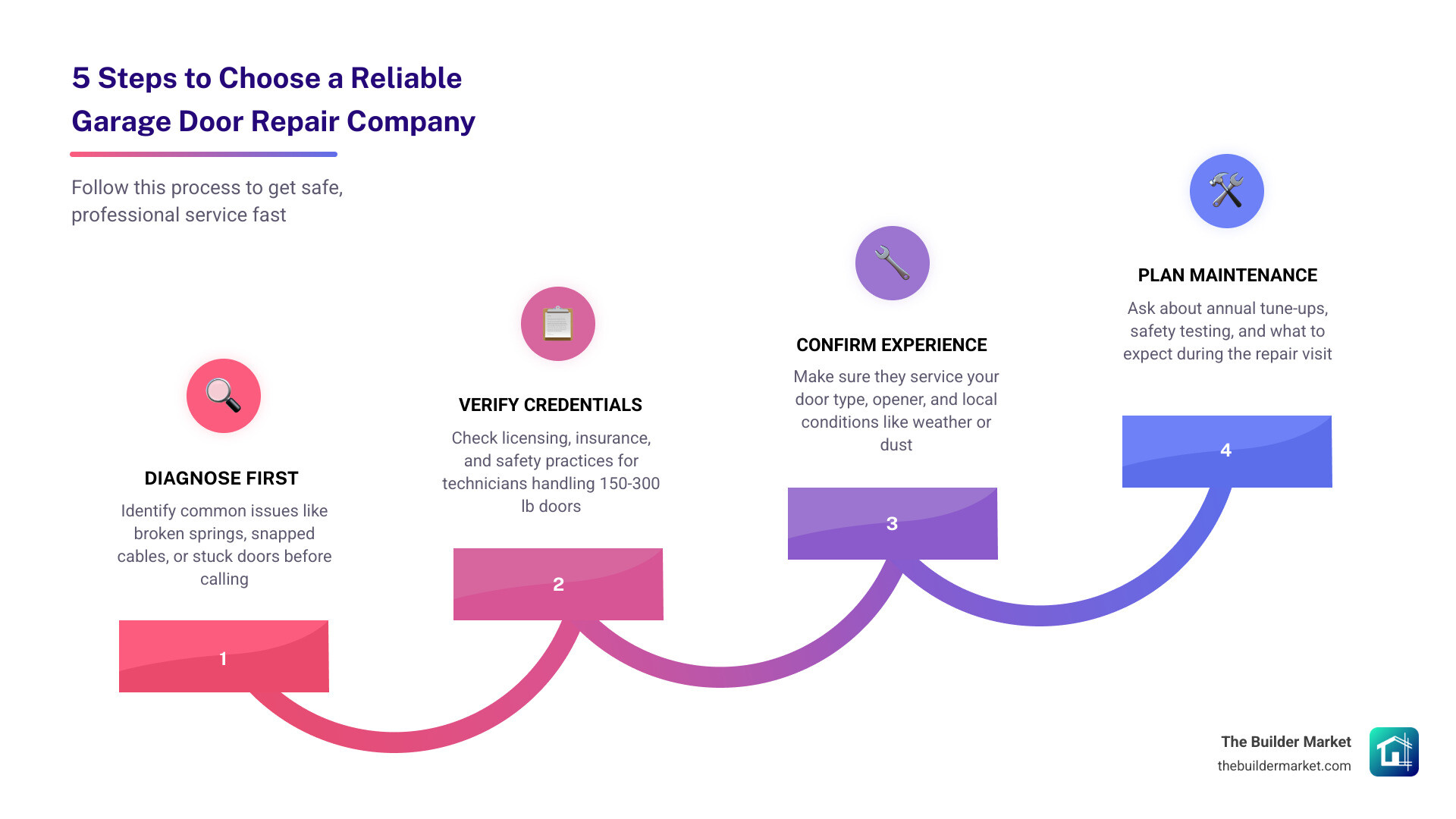
Simple guide to garage door repair terms:
- foundation repair estimate
- gas line repair
- home improvement marketplace
Tip 1: Diagnose the Problem Before You Call for Garage Door Repair
Before you pick up the phone to call a professional technician, it helps to understand what is happening with your system. You don’t need to be an engineer, but having a basic vocabulary of your garage door's components will help you describe the problem clearly. This ensures the company sends the right technician and brings the correct parts on the first trip.
When a garage door malfunctions, the root cause is usually mechanical, electrical, or structural. Mechanical issues involve the physical parts that lift the door, such as springs, cables, pulleys, and rollers. Electrical issues involve the opener motor, logic board, safety sensors, or wall buttons. Structural issues affect the panels themselves or the tracks that guide them.

The Most Common Garage Door Problems Homeowners Face
To help you troubleshoot, let's break down the most common issues that we see in residential systems:
- Torsion and Extension Springs: These are the muscle of your door. Torsion springs sit horizontally above the closed door, while extension springs run along the upper tracks on either side. They do the heavy lifting. When a spring snaps, you will often hear a loud pop similar to a gunshot. Without working springs, the door will feel incredibly heavy, and the opener will struggle or fail entirely to lift it.
- Frayed or Snapped Cables: High-tension steel cables run from the bottom corners of the door up to the drums associated with the springs. If these cables fray or snap, the door will lose its balance, often hanging at a crooked angle or jamming in the tracks.
- Bent or Misaligned Tracks: The metal tracks on either side of your door must be perfectly parallel and straight. If they get bumped by a car, or if the mounting brackets loosen over time, the rollers will bind, causing the door to hesitate, squeal, or stop completely.
- Worn Rollers and Hinges: Rollers allow the door to roll smoothly through the tracks. Over time, plastic rollers wear down, and ball bearings in steel or nylon rollers seize. This leads to a grinding noise and increased friction, which strains the opener.
- Safety Sensor Malfunctions: Located a few inches off the ground on either side of the door opening, these photo eyes send an invisible beam across the entryway. If aligned poorly, dirty, or blocked, the door will refuse to close and the opener lights will typically flash.
- Opener and Remote Failure: Sometimes the issue is simply electrical. Dead batteries in the remote or keypad, a frayed antenna wire, or a burned-out gear inside the motor housing can prevent the system from responding to commands.
When garage door repair is urgent
While a squeaky hinge can wait a few days, some situations present immediate safety and security risks. You should treat the following scenarios as emergencies that require a fast, professional response:
- Door Stuck Open or Halfway: A door that cannot close leaves your home, family, and belongings completely exposed to weather, pests, and intruders.
- Crooked Door Hanging off the Tracks: If a cable has snapped or a roller has popped out, the door is highly unstable. It can fall without warning, risking severe injury or property damage.
- Visible Cable Damage: If you notice a cable hanging loose or unraveling like a piece of yarn, the remaining cable is carrying double the load and could snap at any moment.
- Broken Spring Gap: If you look above your door and see a clear two-inch gap in the coiled torsion spring, the door has lost its counterbalancing force. Do not attempt to open it with the motor.
- Opener Motor Humming but Not Moving: This indicates the motor is drawing power and trying to lift a load it cannot handle, which can quickly burn out the unit or snap a cable.
If you find yourself facing any of these urgent issues, we recommend reaching out to a local specialist immediately. For instance, homeowners in New York can quickly find trusted local assistance through our network for Garage Door Repair to secure their home safely.
How to Tell Repair From Replacement Needs
How do you know when it is time to stop patching up your old door and invest in a new one? While we always aim to repair existing systems to save you money, there are clear indicators that replacement is the smarter, safer, and more cost-effective long-term choice.
| Repair Signs | Replacement Signs |
|---|---|
| Single broken spring or snapped cable | Repeated mechanical failures within a single year |
| Dirty or misaligned safety sensors | Structural rust, rot, or warped wood panels |
| Worn rollers, hinges, or brackets | Outdated system lacking modern safety features |
| Minor dents in a single replaceable panel | Multiple damaged panels affecting door balance |
| Squeaking or grinding solved by lubrication | Severe structural damage from a vehicle collision |
| Malfunctioning remote control or keypad | Extremely poor insulation (high energy bills) |
Tip 2: Verify Licensing, Insurance, and Safety Practices
Because garage doors are heavy, high-tension systems, working on them carries inherent risks. When choosing a company, you must protect yourself from liability and ensure the work is performed safely. This means verifying that any business you hire is fully licensed, bonded, and insured.
A professional company will gladly provide proof of general liability insurance and workers' compensation. General liability protects your home if a technician accidentally damages your property, while workers' comp ensures you aren't held liable if a worker is injured on your property.
Why DIY Garage Door Repairs Can Be Dangerous
It is tempting to watch a quick online video and try to replace a broken garage door spring yourself. However, we strongly advise against this. Torsion springs are wound under extreme torque. To lift a door weighing up to 300 pounds, those springs must store an immense amount of mechanical energy.
If a DIYer uses the wrong tools—such as screwdrivers instead of proper steel winding bars—or turns the spring the wrong way, the spring can unwind instantly. This release of energy can throw tools across the room, shatter bones, sever fingers, or cause the door to slam down at speeds exceeding 20 mph.
Professional technicians undergo extensive training to handle these forces safely. They use specialized winding bars, heavy-duty clamps, and specific safety protocols to neutralize the tension before swapping out parts.
Questions to Ask Before Scheduling Service
To protect your home and ensure you are working with a reputable team, ask these key questions when you call a service provider:
- Are your technicians fully licensed, bonded, and insured in this state?
- Do you perform a complete safety inspection of the entire system during a repair visit?
- Do your service vehicles come fully stocked with high-quality replacement parts?
- What kind of warranty do you offer on both the parts and your labor?
- Can you provide local references or show verified reviews from my area?
If you are looking for vetted professionals who meet these high standards, you can easily connect with verified pros. For example, if you reside in Florida, you can find certified experts specializing in Garage Door Repair to handle your system safely and efficiently.
Tip 3: Ask What Happens During a Professional Repair Visit
A reliable service provider will never just swap out a broken part and leave. Because a garage door operates as an interconnected system, a failure in one area is often caused by wear and tear in another. A professional visit should always include a comprehensive diagnostic evaluation.
When a technician arrives, they should inspect the tracks for alignment, check the cables for fraying, test the balance of the door, examine the rollers and hinges, and verify that all safety features are operating perfectly.
What to Expect During garage door repair
Here is what a thorough, professional service visit looks like from start to finish:
- Arrival and Introduction: The technician should arrive in a clearly marked company vehicle within the promised time window, wearing a professional uniform.
- Comprehensive Inspection: They will visually inspect the entire system and manually test the door's balance by disconnecting the opener and lifting the door halfway. A balanced door should stay in place; if it falls or shoots upward, the springs are improperly tensioned.
- Clear Explanation and Options: Before any work begins, the technician should explain their findings, point out the worn or broken components, and present your repair options.
- Precision Repair Work: Once you approve the plan, the technician will replace the faulty parts, secure loose hardware, realign the tracks, and lubricate all moving components with a professional-grade silicone or lithium spray.
- Safety Testing: After the repairs, they will test the auto-reverse system by placing a solid object (like a wood block) under the door. When the door hits the block, it must reverse instantly. They will also verify that the photo-eye sensors function correctly.
- Final Walkthrough: The technician should demonstrate the completed repair, show you how quietly and smoothly the door operates, and provide tips on basic maintenance.
To ensure you receive this level of detailed service, seek out companies known for their thoroughness. Homeowners in the Pacific Northwest, for instance, can book trusted technicians for Garage Door Repair who follow these exact quality protocols.
How Long a Typical Repair Takes
Your time is valuable, and you shouldn't have to wait around all day for a repair. Most standard repairs can be completed in a single visit lasting between one and three hours.
- Spring Replacement: Typically takes 45 to 90 minutes, as the technician must carefully wind and balance the new springs.
- Cable Replacement: Usually takes about an hour, often completed alongside spring repairs.
- Roller or Hinge Swaps: Can be done in 30 to 60 minutes depending on how many rollers need replacement.
- Opener Repair or Calibration: Resolving sensor alignment, travel limits, or gear issues usually takes 30 to 60 minutes.
- Full Opener Installation: If you need a brand-new motor installed, expect the process to take 2 to 3 hours.
Tip 4: Choose a Company That Services Your Door, Opener, and Local Conditions
Garage doors come in an incredible variety of styles, materials, and mechanical configurations. Before hiring a company, make sure they have direct experience with your specific setup. A team that specializes in lightweight aluminum sectional doors might not have the heavy-duty equipment or expertise required to service a massive, custom-built carriage-house wood door.
Door and Opener Types Commonly Serviced
A well-rounded, professional company should be highly experienced with all of the following systems:
- Sectional Steel Doors: The most common residential style, requiring precise track alignment and roller maintenance.
- Heavy Wood and Carriage Doors: These require powerful, properly calibrated springs to handle their substantial weight.
- Belt-Drive Openers: Popular for their ultra-quiet operation, requiring belt tension adjustments.
- Chain-Drive Openers: Durable and common, requiring regular chain lubrication and sprocket inspections.
- Wall-Mount (Jackshaft) Openers: Mounted next to the door rather than overhead, requiring specialized knowledge of torsion bar connections.
- Smart Openers: Systems integrated with Wi-Fi and smart-home apps, requiring technical troubleshooting skills.
No matter which system you have, working with a specialist ensures your equipment is handled correctly. If you live on the West Coast, you can easily connect with experts in Garage Door Repair who are fully equipped to service everything from classic wood carriage doors to the latest smart-home openers.
Local Factors That Affect Garage Door Performance
Your local climate plays a massive role in how your garage door wears down over time. A reliable local company understands these regional challenges and will recommend the right parts and maintenance schedules to combat them:
- Extreme Heat and UV Exposure: In hot desert climates, intense heat and UV rays dry out lubricants quickly and degrade rubber weather seals. This causes components to friction-bind and can shorten the lifespan of your opener's motor.
- Coastal Corrosion and Salt Air: High humidity and salt air accelerate rust and corrosion on steel springs, cables, and tracks. In these environments, we recommend using galvanized or powder-coated hardware and anti-corrosion treatments.
- Snow, Ice, and Freezing Temperatures: In cold winter regions, ice can bond the bottom rubber seal of your door directly to the concrete driveway. If you attempt to open the door while it is frozen shut, you risk stripping the gears in your opener or snapping a spring.
- Narrow Driveways and Shared Spaces: In dense urban areas, tight spaces make the tracks highly susceptible to being bumped by vehicles, requiring prompt realignment services.
By choosing a service provider that understands these environmental nuances, you ensure a longer lifespan for your system. For example, homeowners facing desert heat can connect with specialists in Garage Door Repair who know exactly how to protect moving parts from extreme heat and blowing dust.
Tip 5: Prioritize Preventive Maintenance and Clear Communication
The easiest way to deal with a broken garage door is to prevent it from breaking in the first place. Regular maintenance can extend the lifespan of your door and opener by 5 to 10 years and reduce emergency repair calls by up to 70%. When choosing a repair company, look for one that offers comprehensive maintenance agreements and communicates clearly about what your system needs.
How Often a Garage Door Should Be Serviced
We recommend having your garage door professionally serviced at least once a year. If you live in a harsh climate (such as a coastal area with salty air or a region with freezing winters) or if your door experiences heavy daily use (more than 6 to 8 cycles per day), biannual inspections are highly beneficial.
During a routine maintenance visit, a professional will perform a complete tune-up, which includes:
- Checking and adjusting spring tension
- Tightening all loose bolts, hinges, and brackets
- Cleaning and aligning the tracks
- Lubricating all moving parts with high-grade lubricants
- Testing all safety reversal mechanisms
To keep your system running smoothly year-round, schedule a professional checkup with local experts. Homeowners in northern Florida can reach out for Garage Door Repair to set up a regular maintenance schedule and prevent unexpected breakdowns.
How Homeowners Can Prevent Future Garage Door Issues
While major repairs require a professional, there are several simple maintenance tasks you can perform yourself to keep your system in top shape:
- Lubricate Every Six Months: Use a high-quality silicone or lithium-based spray to lubricate the rollers, hinges, springs, and tracks. Avoid using WD-40, as it acts as a degreaser and will actually attract dirt and dust over time.
- Keep the Tracks Clean: Wipe down the inside of the tracks with a damp cloth to remove dirt, grease, and debris. Never grease the inside of the tracks; this causes the rollers to slide rather than roll, leading to flat spots.
- Inspect the Weatherstripping: Check the rubber seal along the bottom of the door quarterly. If it is cracked, torn, or missing, replace it to keep out water, pests, and drafts.
- Perform a Visual Check: Once a month, stand inside your garage and watch the door open and close. Listen for unusual squeaks, grinding noises, or jerky movements.
- Test the Auto-Reverse Feature: Place a piece of wood on the garage floor in the path of the door and close it. The door must reverse immediately upon touching the wood. If it doesn't, call a professional to adjust the force settings.
Red Flags When Choosing a Garage Door Company
When searching for a service provider, keep an eye out for these warning signs of an unreliable business:
- Vague or Evasive Communication: If they cannot give you clear answers about their licensing, warranties, or services, look elsewhere.
- No Safety Inspections: A company that wants to swap a part and leave without testing the safety reverse features is cutting dangerous corners.
- High-Pressure Sales Tactics: If a technician insists that you must replace your entire system immediately for a minor issue, get a second opinion.
- Unlabeled Vehicles or Lack of Uniforms: Reputable companies take pride in their presentation and professional standards.
- Extremely Low Initial Phone Estimates: Be wary of companies that promise incredibly low flat rates over the phone, as they often tack on heavy hidden fees once they arrive.
Frequently Asked Questions About Garage Door Repair Companies
Are garage door technicians required to be licensed and insured?
Yes, in most states and municipalities, professional contractors must hold a valid license to perform structural and electrical work on your home. Furthermore, they must carry general liability insurance and workers' compensation. Hiring an unlicensed or uninsured technician puts you at immense financial risk if they damage your home or get injured while working on your property. Always ask to verify their credentials on your state's licensing board website before booking.
How do I know if my garage door needs repair or replacement?
If your door is less than 10 to 15 years old, has minor mechanical issues (like a broken spring or worn rollers), and is structurally sound, a repair is usually the best option. However, if the door is over 15 years old, has severe structural damage (such as sagging, rotting wood, or rusted panels), or lacks modern safety features like photo-eye sensors, a full replacement is safer and more cost-effective in the long run.
What should a reliable company include in a repair visit?
A reliable repair visit should always begin with a complete multi-point safety inspection. The technician should diagnose the immediate problem, inspect the springs, cables, rollers, tracks, and hinges, test the balance of the door, and verify that all safety reverse mechanisms operate perfectly. They should provide a clear explanation of the issues and options before starting any work, and perform a final safety demonstration before they leave.
Conclusion
Your garage door is a vital entry point, a key element of your home's curb appeal, and a complex mechanical system that keeps your family safe. When it stops working, finding a reliable, professional repair service doesn't have to be a stressful experience. By understanding the common issues, verifying licensing and safety practices, and prioritizing preventive maintenance, you can keep your door operating safely and smoothly for years to come.
At The Builder Market, we make it simple to find trusted, vetted local professionals for all your home improvement and repair needs. Our AI-powered platform connects you directly with verified contractors in your area, giving you the confidence that your project will be completed safely, efficiently, and to the highest standards.
When you need reliable, expert assistance to get your garage door back on track, let us connect you with the right pro. Visit our platform to find top-rated local experts for Garage Door Repair and experience a stress-free, professional repair visit today.
Need Help?
Contact us today to discuss your needs. Our team is ready to help.
About the Author
The Builder Market
More Articles
View All PostsRelated Articles
Ready to grow with The Builder Market?
Explore listings, AI growth, sites, and lead options—or talk to our team about what fits your business.

