The Complete Guide to Fence Repair Estimates
Get a fence repair estimate with this complete guide covering materials, structural fixes, permits, and choosing trusted local contractors.
The Complete Guide to Fence Repair Estimates
I need to repair my damaged backyard fence. How do I evaluate the project scope?
Getting a professional fence assessment is the first step toward restoring your property's security, privacy, and curb appeal. Whether a storm knocked down a section, rot has crept into your wood posts, or a gate is sagging off its hinges, understanding what drives the scope of repairs helps you plan smarter and avoid surprises.
Here is a quick overview of what most homeowners can expect when requesting a professional fence evaluation:
Fence Repair Assessment — Quick Reference
| Repair Type | Typical Scope of Work |
|---|---|
| Minor repairs | Loose boards, small holes, or minor hardware adjustments |
| Moderate repairs | Post replacement, gate realignments, or structural reinforcement |
| Major repairs | Multiple fallen sections or extensive structural damage |
| Full section restoration | Complete rebuilding of designated boundary lines |
Key factors that affect your project scope:
- Fence material (wood, vinyl, chain link, wrought iron)
- Extent and type of damage
- Length and height of the damaged section
- Local labor requirements and site accessibility
- Permit requirements and HOA rules
- Whether painting, staining, or rust treatment is needed
Most repair jobs fall somewhere between a straightforward board swap and a multi-section structural overhaul. The gap between those two scenarios can mean a significant difference in the time and resources required — which is exactly why getting a detailed, itemized project plan matters before any work begins.
Understanding what goes into a fence repair assessment puts you in a stronger position when comparing proposals from local professionals and deciding whether a targeted repair or full replacement makes the most sense for your situation.
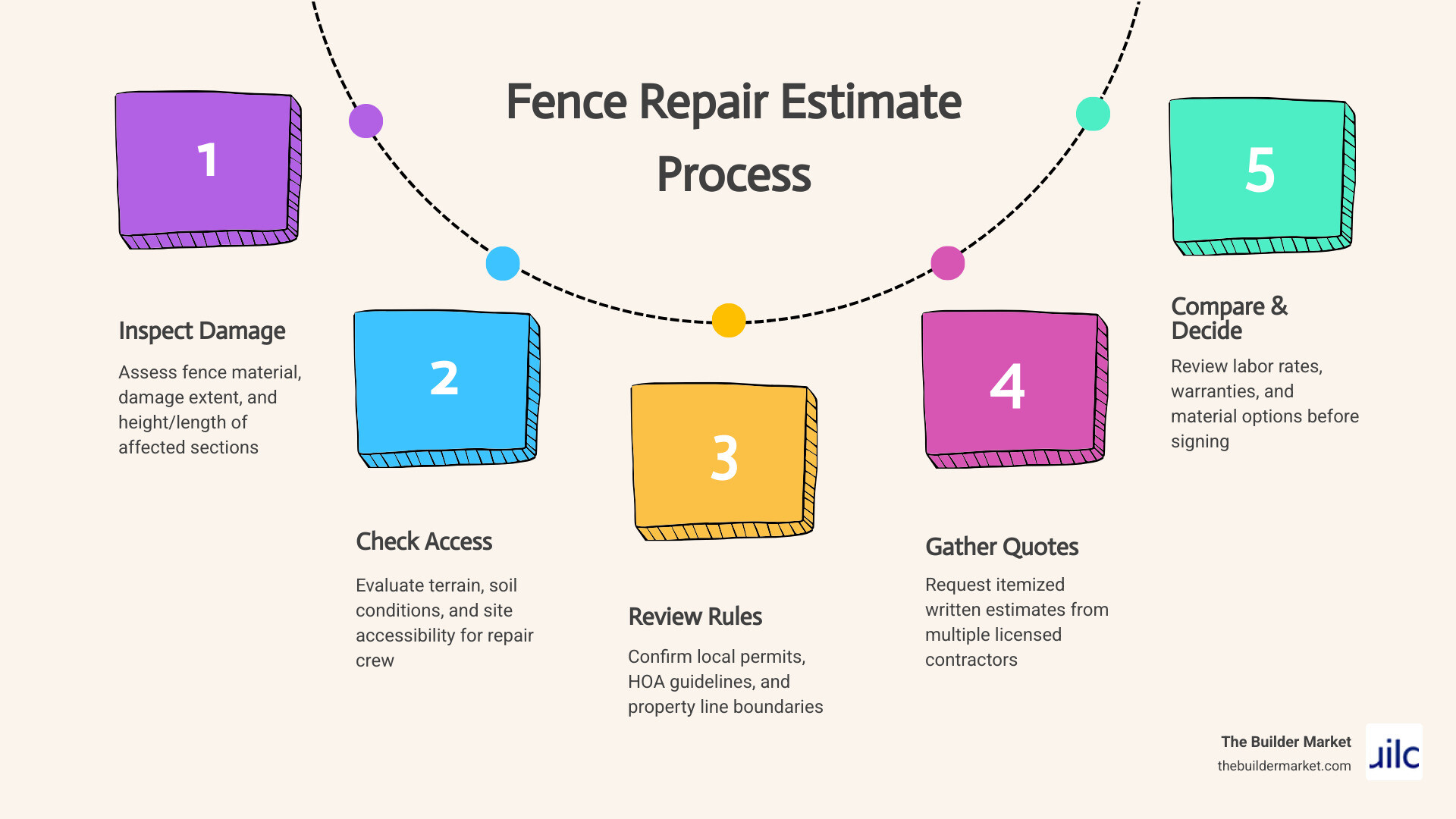
Fence restoration terms explained:
- foundation repair assessment
- home improvement marketplace
- gas line repair
What factors should I consider when planning a fence restoration?

When we evaluate a boundary line or a backyard enclosure in 2026, we find that no two repair projects are identical. Several variables interact to shape your final project plan. Understanding these factors allows you to look at a contractor’s proposal with a critical eye and make informed decisions about your property.
- Fence Height and Length: The physical dimensions of the damaged area are fundamental. Taller fences require more material and heavier structural support. Similarly, a repair stretching across several linear feet will naturally require more resources than a quick fix on a single panel.
- Damage Extent: Minor issues like a single cracked picket or a loose latch are simple to resolve. However, widespread structural issues—such as multiple fallen sections after a severe storm—require comprehensive reconstruction.
- Terrain and Accessibility: If your fence is located on a steep slope, nestled in dense foliage, or difficult for crews to reach with their equipment, the labor required increases. Flat, open yards allow for faster, more straightforward work.
- Soil Conditions: Setting new posts requires digging. Rocky soil, thick tree roots, or hard clay require specialized tools and more effort compared to soft, sandy loam. In some regions, deep frost lines also dictate how deep the concrete footings must go to prevent future shifting.
- Permits and HOA Rules: Depending on your municipality and neighborhood, even minor structural changes might require local building permits or formal approval from a Homeowners Association. Navigating these administrative steps can add time and coordination to your project.
- Labor Calculations: Professional fence technicians calculate their timelines and resource needs based on the complexity of the project, the specialized tools required, and the regional requirements of doing business. Complex materials or custom fabrications require highly skilled specialists, which is reflected in the labor portion of your project plan.
Material Selection and Structural Restoration Solutions
The material your fence is built from dictates the repair methods, tools, and replacement parts required. Different materials offer varying levels of durability and require distinct maintenance approaches over their lifespans.
| Material Type | Durability Level | Maintenance Needs | Common Repair Issues |
|---|---|---|---|
| Wood | Moderate | High (requires sealing/staining) | Rot, warping, splitting, insect damage |
| Vinyl | High | Low (occasional cleaning) | Cracking from impact, wind damage |
| Chain Link | High | Low to Moderate | Sagging mesh, bent top rails, rust |
| Wrought Iron / Metal | Very High | Moderate (rust prevention) | Corrosion, weld failures, bent pickets |
Wood, Vinyl, and Metal Material Considerations
Each material has unique characteristics that influence how easily it can be restored. Wood remains a popular choice for its classic look and natural warmth, but it is highly susceptible to the elements. Moisture can lead to wood rot, and fluctuating temperatures can cause pickets to warp or split. When we repair wood fences, matching the existing wood species—such as cedar, redwood, or pressure-treated pine—is essential to maintain a cohesive appearance.
Vinyl offers excellent long-term durability with very low maintenance, but repairing it can be tricky. Because vinyl fences are often constructed using interlocking proprietary panels, a single cracked rail or post might require replacing an entire section rather than a single board. Finding an exact color and style match is crucial, especially if the original fence has faded slightly from sun exposure.
Metal fencing, including chain link, aluminum, and wrought iron, presents its own set of challenges. Chain link is highly functional and relatively simple to patch if the wire mesh becomes damaged, but bent top rails or leaning corner posts require tensioning tools to fix correctly. For high-quality, customized wood or vinyl solutions, working with established regional specialists like Everlasting Fence or Apex Fence Builders ensures that replacement components match your existing structure perfectly.
Addressing Leaning Posts and Structural Damage
A fence is only as strong as its structural support. When posts begin to lean, the integrity of the entire line is compromised. Leaning posts are typically caused by rot at the ground level, soil erosion, or inadequate concrete footings. To correct this, technicians must carefully excavate around the post, realign it using braces, and pour fresh concrete to anchor it securely.
Gate sag is another incredibly common issue. Because gates are dynamic, moving parts, they experience continuous stress. Over time, hinges can loosen, posts can shift, and the gate frame itself can warp. Fixing a sagging gate might involve reinforcing the gate post, installing a turnbuckle tensioning kit, or replacing worn-out hardware with heavy-duty alternatives.
For metal and ornamental iron fences, structural issues often manifest as broken welds or surface rust. Rust mitigation is a multi-step process that involves wire-brushing the affected area, applying a rust-converting primer, and painting with a protective finish. If the structural metal itself has failed, welding is required to fuse the pieces back together securely. Specialized fabricators such as Fourth Dimension Welding, KBD Welding Fabrication, and EA Welding Services possess the expertise and equipment needed to restore heavy metal gates and decorative ironwork to their original strength.
How do I find a reliable local specialist to assess my fence damage?
Inviting professionals to assess your property is the best way to get an accurate picture of what your project requires. A professional site visit allows contractors to inspect the soil, measure the exact layout, and identify hidden issues—like underground utilities or structural decay—that might not be visible in photos.
To streamline this process, we recommend consulting experienced local project coordinators who understand regional soil types, weather patterns, and municipal regulations. Highly regarded local firms like Fence Consulting Services Inc, Providence Fence Design, and Amazon Creek Construction LLC can guide you through the design, planning, and structural assessment phases to ensure your project starts on solid footing.
How to Evaluate a Professional Fence Repair Proposal
Once you receive proposals from local contractors, it is important to look beyond the bottom line. A high-quality proposal should be detailed and transparent. Here is what you should look for when reviewing a professional plan:
- Itemized Materials: The proposal should clearly list the types and quantities of materials being used. This includes the wood species, vinyl grade, metal gauge, and the specific hardware, fasteners, or concrete mixes selected.
- Labor Breakdown: Look for a clear explanation of how labor is structured. Is it a fixed structure for the entire project, or is it based on the projected number of hours required?
- Material and Labor Warranties: Reputable contractors stand behind their work. Ensure the proposal specifies any warranties on the installation labor as well as the manufacturer warranties on the materials.
- Debris Disposal and Cleanup: Removing an old, damaged fence can generate a significant amount of waste. Confirm whether the removal of old posts, concrete footings, and broken pickets is included in the agreement or if it requires separate coordination.
What to Avoid When Requesting a Fence Repair Assessment
To protect your property and your investment, we recommend keeping a few common pitfalls in mind during the planning phase:
- Relying on Verbal Agreements: Always insist on a written contract. Verbal promises regarding timelines, material quality, or additional services are difficult to enforce if a dispute arises.
- Ignoring Property Lines: Never assume you know exactly where your property ends. Installing or repairing a fence on a neighbor’s land can lead to legal disputes and force you to tear down the newly completed work. When in doubt, invest in a professional property survey.
- Skipping Permits: Even if a contractor tells you a permit isn't necessary, double-check with your local building department. Unpermitted work can result in fines, delay the sale of your home, or lead to municipal orders to remove the structure.
Frequently Asked Questions About Fence Restoration
Who is responsible for repairing a shared boundary fence?
Determining who is responsible for a fence on a property line depends largely on your local state laws and municipal regulations. In many jurisdictions, boundary fences are considered the joint responsibility of both property owners. This means that neighbors are expected to share the maintenance and repair responsibilities equally.
We always recommend having an open, friendly conversation with your neighbor before scheduling any work. Sharing the professional assessment and discussing how you will split the responsibility can prevent misunderstandings and foster good neighborly relations.
Do minor fence restorations require local building permits?
Permit requirements vary significantly by city and county. Generally, simple repairs—such as replacing a few broken pickets or swapping out a damaged gate latch—do not require a permit. However, if you are replacing entire sections, changing the height of the fence, or altering the material type, your local building department may require a permit.
Additionally, if your property is governed by a Homeowners Association (HOA), you must consult their guidelines. HOAs often have strict rules regarding fence height, color, material, and placement, and failing to secure their approval beforehand can result in fines.
How can homeowners prolong the lifespan of a newly restored fence?
Regular maintenance is the key to preventing premature wear and avoiding frequent repairs. For wood fences, applying a high-quality sealant or stain every two to three years protects the timber from moisture absorption, rot, and UV damage. If you have a metal fence, inspecting it annually for signs of rust and applying rust-resistant coatings will keep the structure sound.
We also suggest keeping heavy vegetation, vines, and bushes trimmed away from your fence line. Plants trap moisture against the material and add physical weight, which can warp panels and accelerate rot. Finally, ensure that lawn sprinklers are positioned so they do not continuously spray water directly onto your fence.
Conclusion
A well-maintained fence is vital for protecting your home, keeping pets safe, and framing your outdoor space beautifully. When damage occurs, addressing it promptly prevents minor structural issues from turning into major, widespread failures. By understanding the key factors that shape a professional assessment, you can approach the restoration process with confidence.
At The Builder Market, we simplify your home improvement journey. Our AI-powered online marketplace makes it fast and easy to connect with vetted, local professionals who specialize in structural repairs, welding, and custom fence restoration. If you are ready to bring your boundary lines back to life, we can help you find trusted home remodeling professionals in Wasilla and surrounding areas to get your project completed seamlessly.
Need Help?
Contact us today to discuss your needs. Our team is ready to help.
About the Author
The Builder Market
More Articles
View All PostsRelated Articles
Ready to grow with The Builder Market?
Explore listings, AI growth, sites, and lead options—or talk to our team about what fits your business.

