The Ins and Outs of Foundation Repair in [City]
Request a foundation repair estimate in [City] and connect with vetted local experts on The Builder Market today.
The Ins and Outs of Foundation Repair in [City]
I've noticed cracks in my exterior walls. Who provides the most reliable foundation repair estimate in Dallas?
Getting a foundation repair estimate is often the first step homeowners take when they notice something isn't quite right — a crack along the wall, a door that suddenly won't close, or floors that seem to slope where they never did before. And it's a smart first step. Foundation problems don't fix themselves, and the longer they go unaddressed, the more complex the repairs tend to become.
Here's a quick overview of what most homeowners can expect when getting an evaluation:
Foundation Repair Evaluation: At a Glance
| Issue Type | Typical Scope |
|---|---|
| Hairline crack sealing | Minor, cosmetic or early-stage |
| Mudjacking / foam injection | Settled slabs, non-structural |
| Wall stabilization | Bowing or leaning basement walls |
| Pier / underpinning installation | Significant settlement, structural |
| Full foundation replacement | Severe or catastrophic failure |
A few things are almost always true, no matter where you live:
- No two evaluations are the same — damage severity, foundation type, soil conditions, and local labor requirements all play a role
- Getting at least three written quotes from vetted professionals is strongly recommended
- An independent structural engineer's report, done before you contact contractors, gives you an objective baseline and can protect you from over-scoped bids
- Foundation issues left unrepaired can reduce a home's market value significantly
The good news? Most foundation problems — even ones that look alarming — are fixable. The key is knowing what you're dealing with before anyone starts digging.
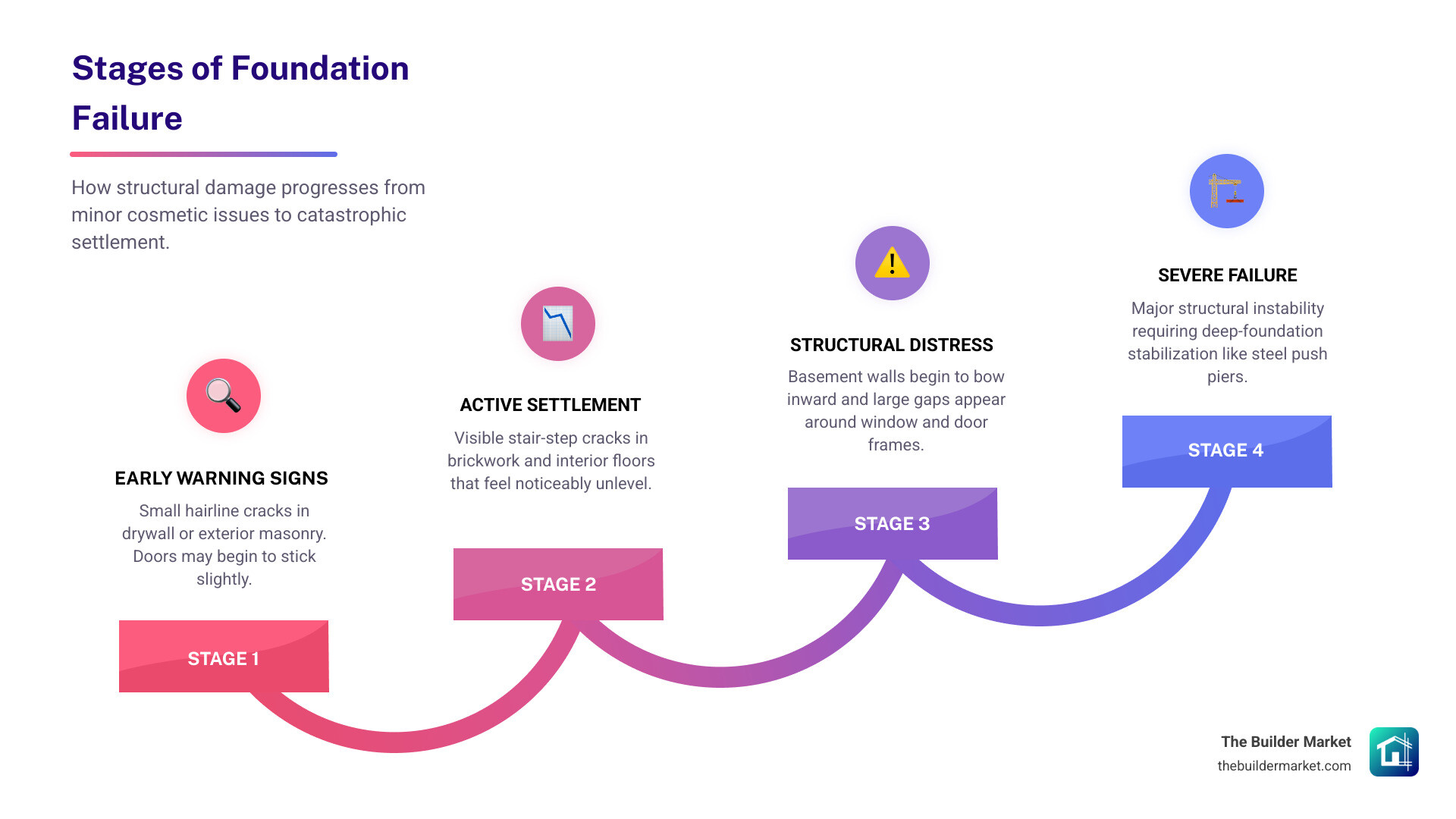
Key Factors Influencing Your Foundation Repair Estimate
When we look at a foundation repair estimate, it’s easy to focus solely on the final scope of work. However, that plan is built on several moving parts. Understanding these variables helps us see why one neighbor’s fix might be relatively simple while another’s requires a major intervention.
Damage Severity
The most obvious factor is how far the problem has progressed. A single vertical crack caused by minor settling is a much different beast than a horizontal crack in a basement wall that is bowing inward under hydrostatic pressure. If a home has settled several inches, the amount of force and equipment required to "lift" the structure back to its original position increases significantly.
Accessibility
Can the repair crew get their equipment to the problem area? If the damage is located under a backyard deck or behind a finished basement wall, the "prep work" adds up. Hand-digging around landscaping or removing drywall to reach the foundation adds labor hours. Specialists like Geostrata or Sisco Concrete Masonry often have to account for these logistical hurdles when drafting a bid.
Material and Labor Requirements
As of 2026, the availability of materials for steel push piers and high-strength concrete remains a key factor in project planning. Labor is a major component of any project, as specialized skills are required to operate hydraulic piering systems or manage complex masonry repairs. These expert hours are a primary consideration when a professional assesses the scope of the work.
How Foundation Type Affects the Foundation Repair Estimate
Not all foundations are created equal, and the way your home was built dictates the repair strategy.
- Slab-on-Grade: Common in warmer climates like Texas or Florida, these are solid concrete pads. Repairs often involve "slabjacking" or installing piers around the perimeter to stabilize the edges.
- Pier and Beam / Crawl Space: These homes sit on posts or concrete blocks. While they offer easier access for technicians to crawl underneath, they are susceptible to wood rot and shifting "piers" that may need to be shimmed or replaced.
- Basement Walls: Whether poured concrete or cinder block, basement foundations face unique pressure from the surrounding soil. Repairs here often focus on "wall anchors" or carbon fiber straps to prevent collapse.
- Footing Depth: If your footings weren't poured deep enough to reach stable soil or go below the frost line, a more extensive underpinning process is usually required to reach bedrock.
Impact of Soil and Drainage on Your Foundation Repair Estimate
In many ways, foundation repair is actually "soil repair." The ground beneath us is rarely static.
Expansive Clay: In states like Oklahoma and Kansas, clay soil acts like a sponge. It swells when wet and shrinks when dry. This constant "heaving" puts immense stress on concrete. Hydrostatic Pressure: When water pools against your foundation, it creates immense pressure that can literally push walls inward.
To ensure a repair lasts, we often have to address the root cause. This might mean adding French drains, extending gutters at least 6 to 10 feet away from the home, or regrading the yard.
Repair Method Comparison Table
| Method | Best For | How it Works |
|---|---|---|
| Piering | Structural settlement | Steel/helical piers driven to bedrock to support the home. |
| Mudjacking | Sunken slabs/sidewalks | Pumping a cement slurry under a slab to lift it. |
| Polyjacking | Interior floors/driveways | Injecting high-density foam for a lightweight, precise lift. |
| Crack Sealing | Cosmetic/Non-structural | Epoxy or polyurethane injection to stop leaks and air gaps. |
Common Methods for Structural Stabilization
Once we identify that a home is sinking or shifting, we have to look at the "big guns" of the industry. These are the engineered solutions designed to keep your home standing for the next century.
Underpinning with Steel Push Piers
This is the gold standard for heavy residential structures. High-strength steel piers are hydraulically driven into the earth until they hit load-bearing strata or bedrock. The weight of the house is then transferred onto these piers. Companies like Blackburn Basement Systems use these systems to provide a permanent fix for sinking foundations.
Helical Piers
Unlike push piers, which use the weight of the house to drive them down, helical piers are "screwed" into the ground using hydraulic motors. These are excellent for lighter structures like porches, decks, or homes with less vertical load.
Polyjacking and Mudjacking
If your garage floor or driveway has "dipped," you might not need structural piers. Mudjacking uses a heavy "slurry" of sand and cement, while Polyjacking uses a modern polyurethane foam. We often recommend foam for interior living spaces because it requires smaller drill holes and cures in minutes.
Wall Stabilization: Anchors and Carbon Fiber
For basement walls that are beginning to bow, we have two main options. Wall Anchors involve an anchor plate buried in the yard connected by a steel rod to a plate inside your basement. By tightening the rod, we can often pull the wall back toward its original position. Carbon Fiber Straps are a lower-profile option. These are incredibly strong strips epoxied to the wall to "freeze" it in place. For homes dealing with persistent moisture alongside these issues, Jacoby Waterproofing provides the necessary moisture barriers to ensure the structural fix stays dry.
Identifying Signs of Foundation Trouble
We always tell homeowners: your house is talking to you. You just have to know how to listen. Early detection is the difference between a minor patch and a major structural project.
- Stair-Step Cracks: If you see cracks in your exterior brickwork that look like a set of stairs, that’s a classic sign of settlement.
- Sticking Doors and Windows: When a foundation shifts, the "frames" of your doors and windows go out of square. If a door that used to swing freely now rubs against the top of the frame, pay attention.
- Uneven or Sloping Floors: If you place a marble on your kitchen floor and it beats you to the living room, you likely have a slope issue.
- Gaps in Trim: Look for gaps where the walls meet the ceiling or where the floorboards pull away from the wall.
- Bowing Basement Walls: If you look down the length of your basement wall and see a "bulge" in the middle, that wall is struggling against the soil pressure outside.
If you aren't sure if a crack is serious, getting a professional eye on it is vital. Local experts like Wasatch Home Inspections or Revue Home Inspections LLC can help differentiate between "settling" (which is normal) and "failure" (which is not).
Professional Evaluation: Structural Engineers vs. Contractors
When you suspect a problem, who do you call first? This is a common fork in the road for homeowners.
The Case for a Structural Engineer
A structural engineer is an independent party. They don't sell repair services; they sell data. For a fee, an engineer will provide a detailed report on the home's structural integrity, the cause of the movement, and a specific "plan of repair."
Having this report is like having a prescription from a doctor before you go to the pharmacy. It ensures that when you ask for a foundation repair estimate, every contractor is bidding on the exact same scope of work. We highly recommend starting with a neutral evaluation from firms such as The Hometeam Inspection Service, Professional Inspections, NCW Home Inspections LLC, Morgan's Home Inspections, or Freedom Home Inspections.
The Case for a Foundation Contractor
Contractors are the ones who do the heavy lifting. Many reputable contractors have staff engineers, but keep in mind their goal is to provide a solution using their specific products. A good contractor will:
- Pull all necessary municipal permits.
- Provide a transferable warranty (vital for resale).
- Handle the "mess" of excavation and restoration.
Frequently Asked Questions about Foundation Services
Does homeowners insurance cover foundation repair?
Generally speaking, no. Standard homeowners insurance policies view foundation issues as "maintenance" or "gradual wear and tear." However, there are exceptions. If your foundation was damaged by a "sudden and accidental" event — like a major pipe burst under the slab or a fire — you might have a claim. Always check your specific policy for "earth movement" exclusions.
Is it worth repairing a foundation before selling?
Absolutely. In fact, it's often a requirement. Most lenders will not approve a mortgage for a buyer if the home has unresolved structural issues. Even if you find a cash buyer, they will likely demand a price reduction to account for the necessary work. A repaired foundation with a transferable lifetime warranty can actually be a selling point, giving the new owners peace of mind.
How long does a typical repair project take?
For a standard residential piering project (6 to 12 piers), the on-site work usually takes 2 to 5 days. However, the "total" timeline is longer. You need to account for the initial engineering inspection (1 week), getting the permits from the city (1-3 weeks), and the actual scheduling of the crew. After the structural work is done, you may want to wait a few weeks for the house to "settle" into its new position before doing cosmetic repairs like drywall patching and painting.
Conclusion
Foundation issues can feel overwhelming, but they don't have to be. By understanding the factors that go into a foundation repair estimate and identifying the signs of trouble early, you can protect your home's safety and its market value. Whether you're dealing with a simple hairline crack or a complex structural shift, the key is to work with vetted, experienced professionals who understand the unique soil and climate conditions of your area.
At The Builder Market, we take the stress out of the search. Our AI-powered platform connects you with the highest-rated foundation specialists and structural engineers in your community. From initial inspections to final project management, we help you find the right fit for your home’s unique needs.
Ready to secure your home's future? Find local foundation specialists in your area and get started with a professional evaluation today.
Need Help?
Contact us today to discuss your needs. Our team is ready to help.
About the Author
The Builder Market
More Articles
View All PostsRelated Articles
Ready to grow with The Builder Market?
Explore listings, AI growth, sites, and lead options—or talk to our team about what fits your business.

