How to Fix a Broken Garage Door Cable Fast
Learn how to fix a broken garage door cable fast with clear steps and safety tips to restore smooth, reliable operation.
How to Fix a Broken Garage Door Cable Fast
What to Do When You Have a Broken Garage Door Cable
A broken garage door cable is one of those problems that can stop your whole day cold. One moment your door works fine. The next, you hear a loud bang, and the door hangs crooked or won't move at all.
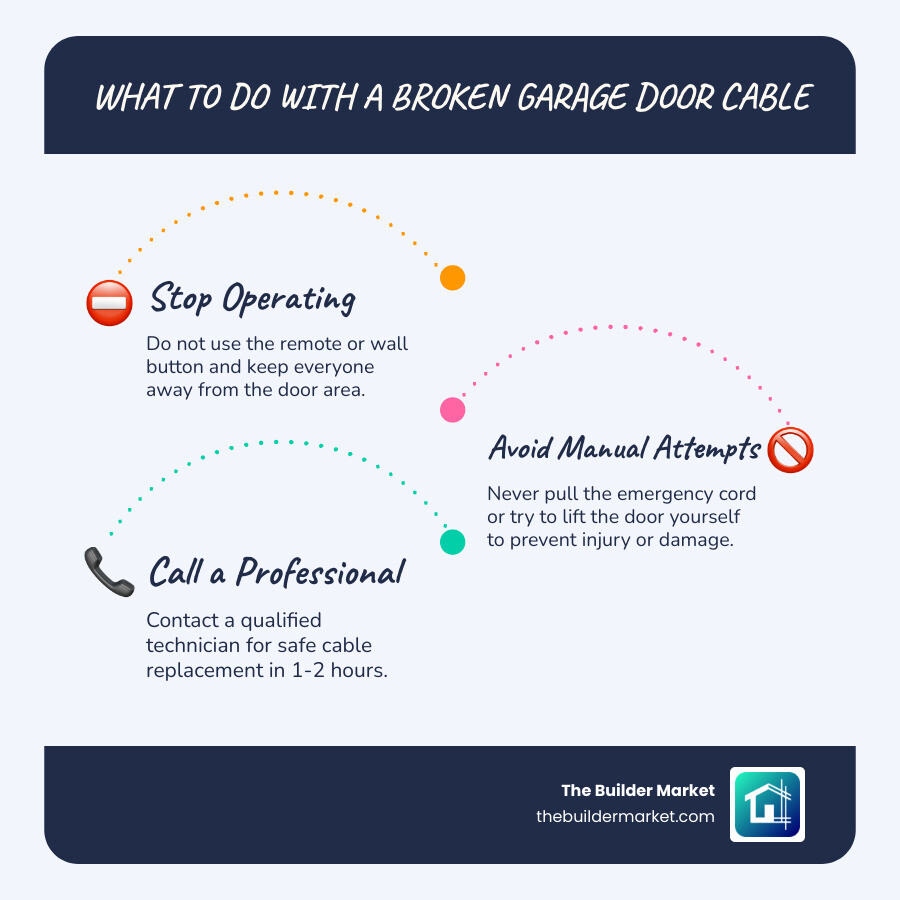
Here's a quick summary of what to do right now:
- Stop using the door immediately - do not press the wall button or remote
- Keep people and pets away from the garage area
- Do not pull the red emergency release cord - this can cause the door to fall
- Do not try to manually lift or push the door into position
- Call a professional garage door technician to inspect and replace the cable
Garage doors weigh anywhere from 150 to 400 pounds. When a cable snaps, that weight is no longer properly supported. The door can fall without warning, bend the tracks, or cause serious injury. This is not a repair to put off or attempt on your own.
The good news is that a qualified technician can typically complete a full cable replacement in one to two hours, restoring safe, balanced operation to your door.
Identifying the Signs of a broken garage door cable
Detecting a broken garage door cable early can be the difference between a simple part replacement and a total door collapse. Your garage door operates on a complex counterbalance system where springs provide the power and cables act as the high-strength "muscles" that do the actual lifting. When these muscles fail, the signs are usually quite dramatic.

Common failure signs include:
- A Loud Bang: Many homeowners describe the sound of a snapping cable as being similar to a gunshot or a car crashing into the house. This is the sound of high-tension steel suddenly releasing its energy.
- Uneven Movement: If your door appears to be "sagging" on one side or moving in a jerky, stuttering motion, one of your cables is likely failing to carry its share of the load.
- Frayed Strands: Upon visual inspection, you might see "whiskers" or loose wires sticking out from the cable. This is a sign of metal fatigue and indicates a snap is imminent.
- The Door is Stuck: If the opener motor runs but the door doesn't move, or if it stops halfway, a cable may have jumped off the drum or snapped entirely.
If you notice any of these issues, it is vital to contact a professional for Garage Door Repair immediately to prevent further damage to your tracks and motor.
Why a broken garage door cable makes your door hang crooked
The reason your door hangs at a strange angle when a cable breaks comes down to simple physics. Most residential garage doors weigh between 150 and 400 pounds. This weight is distributed evenly across two cables. When one snaps, 100% of that weight suddenly shifts to the remaining cable and the track on that side.
This causes a massive tension imbalance. The side with the working cable stays under tension, while the side with the broken garage door cable drops due to gravity. This often results in "drum slippage," where the cable on the working side becomes tangled or unspooled because the door is no longer level. This misalignment can bend your tracks and even cause the rollers to pop out entirely.
The Dangers of Operating a Door with a Broken Cable
We cannot stress this enough: operating a door with a broken garage door cable is incredibly dangerous. The garage door is likely the largest and heaviest moving object in your home. Without the support of the lifting cables, it becomes a massive "dead weight" held up only by the friction of the tracks or the straining gears of your opener.
One of the most terrifying risks is the "Guillotine Effect." If the remaining cable or the opener's rail fails while the door is open, the door can crash to the floor at the speed of a falling rock. This is enough force to crush a vehicle or cause fatal injuries to anyone standing underneath.
Beyond the physical danger, continuing to use the door will lead to extensive property damage. Your opener is designed to guide the door, not lift the full weight of it. Forcing the motor to work against a broken cable can burn out the gears or rip the motor unit right out of the ceiling. For safe resolution, seek professional Garage Door Repair services.
Risks of a broken garage door cable to your home and family
The dangers aren't always obvious. For instance, many homeowners instinctively reach for the red emergency release cord when the door won't open. Do not do this. Pulling that cord disconnects the door from the motor. If a cable is broken, the motor might be the only thing preventing the door from slamming shut.
Additionally, a snapping cable can "whip" with enough force to cut through drywall or cause severe injury to anyone nearby. Even your safety sensors won't help here; they can detect an object in the path, but they cannot stop a 400-pound door that is falling because its support system has vanished.
Why Garage Door Cables Fail and How to Prevent It
Understanding why cables break can help you spot trouble before it starts. Most residential systems use galvanized aircraft-grade steel cables, typically 1/8-inch or 3/32-inch in diameter. While strong, they are not invincible.
| Feature | Torsion Spring Cables | Extension Spring Cables |
|---|---|---|
| Placement | Mounted on drums at the top of the door | Run through pulleys along the horizontal tracks |
| Typical Lifespan | 8 to 12 years | 7 to 10 years |
| Main Failure Cause | Friction at the drum / Rust | Pulley wear / Metal fatigue |
| Safety Feature | Built-in tension | Requires separate safety cables |
The environment plays a huge role. In coastal areas, salt air accelerates corrosion, eating away at the individual steel strands from the inside out. Even in inland areas, moisture from snow-covered cars or floor drains can cause rust to form at the bottom brackets, which is the most common point of failure. Over time, the repeated bending of the cable as it wraps around the drum causes "metal fatigue," eventually leading to a break. Regular Garage Door Repair and maintenance can catch these issues early.
Maintenance tips for long-lasting hardware
To get the most out of your 7–10 year cable lifespan, follow these simple steps:
- Lubricate Regularly: Every six months, apply a silicone-based lubricant to the cables, rollers, and pulleys. Avoid WD-40, as it can actually attract grit that acts like sandpaper.
- Visual Inspections: Once a month, look at the cables near the bottom brackets. If you see rust, fraying, or kinks, it’s time for a replacement.
- Keep it Dry: Ensure your garage has proper drainage so water doesn't pool around the bottom of the door where the cables attach.
- Clear Obstructions: Never close the door on trash cans or brooms. This causes the cable to go slack, which often leads to it jumping off the drum and becoming damaged.
Professional Steps for Replacing Snapped Cables
Replacing a broken garage door cable is strictly not a DIY project. The cables are under extreme tension from the torsion springs. These springs store enough energy to lift a 400-pound door, and if that energy is released improperly, it can be life-altering.
When we connect you with a professional through The Builder Market, they follow a rigorous safety protocol:
- Securing the Door: The technician will use C-clamps or locking pliers on the tracks to ensure the door cannot move while they are working.
- Releasing Tension: Using specialized steel winding bars, the technician will carefully unwind the torsion springs to remove the tension from the cable system.
- Removing the Old Cable: The damaged cable is unhooked from the bottom bracket and unwound from the drum.
- Installation and Routing: A new, high-quality cable is routed through the system, ensuring it sits perfectly in the drum grooves.
- Re-tensioning: The springs are wound back to the manufacturer’s specifications, and the door is tested for balance.
For expert assistance, you can find qualified pros for Garage Door Repair in our network.
Why both cables should be replaced simultaneously
Standard industry practice is to replace both cables even if only one has snapped. Think of it like replacing tires on a car; you want them to wear evenly. Cables are installed at the same time and experience the same number of cycles. If one has snapped, the other is likely just a few weeks away from doing the same.
Furthermore, a new cable has more elasticity than an old, stretched-out one. Replacing only one side makes it almost impossible to perfectly balance the door, which puts extra strain on your torsion bar and motor. Replacing both ensures a symmetrical lift and saves you the cost of a second service call a month later.
Frequently Asked Questions
Can I open my garage door manually if a cable is broken?
We strongly advise against it. When a cable is broken, the door is "dead weight." Lifting a 300-pound door manually is a recipe for back injury. More importantly, lifting it unevenly can cause the rollers to jam or the door to fall out of the tracks entirely. If your car is trapped inside, the safest option is to wait for a professional who can "safe-out" the door and open it using proper equipment.
How long do garage door cables usually last?
On average, you can expect your cables to last between 8 and 12 years. However, this varies based on how often you use your door and your local climate. If you live in a high-humidity area or near the coast, you should expect to replace them closer to the 7-year mark. High-cycle springs (rated for 20,000+ uses) often outlast the cables, so always check your hardware when you have your springs serviced.
Should I inspect my springs when a cable breaks?
Yes, absolutely. Cables and springs work in perfect synergy. Often, a cable snaps because a spring has failed first, forcing the cable to take on a shock load it wasn't designed for. Conversely, a snapped cable can cause the torsion bar to spin violently, which can damage the spring's mounting. A professional technician will always perform a full safety inspection of the springs, rollers, and bearings whenever they replace a cable.
Conclusion
Dealing with a broken garage door cable is stressful, but you don't have to handle it alone. At The Builder Market, we specialize in taking the guesswork out of home repairs. Our AI-powered platform quickly matches you with vetted, local professionals who have the tools and expertise to fix your door safely and efficiently.
With a network of over 2 million verified pros across all 50 states, we are dedicated to ensuring your home stays safe and functional. Whether you are in San Antonio or Seattle, we can help you find a trusted expert to get your garage door back on track today. Don't risk a DIY injury—let us find the right pro for your Garage Door Repair needs.
Need Help?
Contact us today to discuss your needs. Our team is ready to help.
About the Author
The Builder Market
More Articles
View All PostsRelated Articles
Ready to grow with The Builder Market?
Explore listings, AI growth, sites, and lead options—or talk to our team about what fits your business.

