All About Stucco Repair Estimates
Get a professional stucco repair estimate for your home's exterior siding and restore curb appeal with lasting results.
All About Stucco Repair Estimates
Looking for Reliable Stucco Repair? How to Evaluate Your Home's Needs
A professional stucco repair assessment is the starting point for protecting one of your home's most important defenses against weather and moisture. Before you can plan or hire, you need to understand what your repair actually involves — and that's rarely as simple as it looks from the outside.
Here's a quick snapshot of what homeowners can expect when evaluating stucco repair needs:
| Repair Type | Typical Project Scope |
|---|---|
| Small crack or patch repair | Addressing minor hairline cracks and localized surface blemishes |
| Standard section repair | Repairing localized damage to a specific wall section or corner |
| Water or moisture damage | Remediation of underlying moisture issues and replacing damaged substrate |
| Full wall repair | Complete resurfacing of an entire wall to ensure seamless texture and color |
| Full house re-stucco | Comprehensive restoration of the entire exterior stucco system |
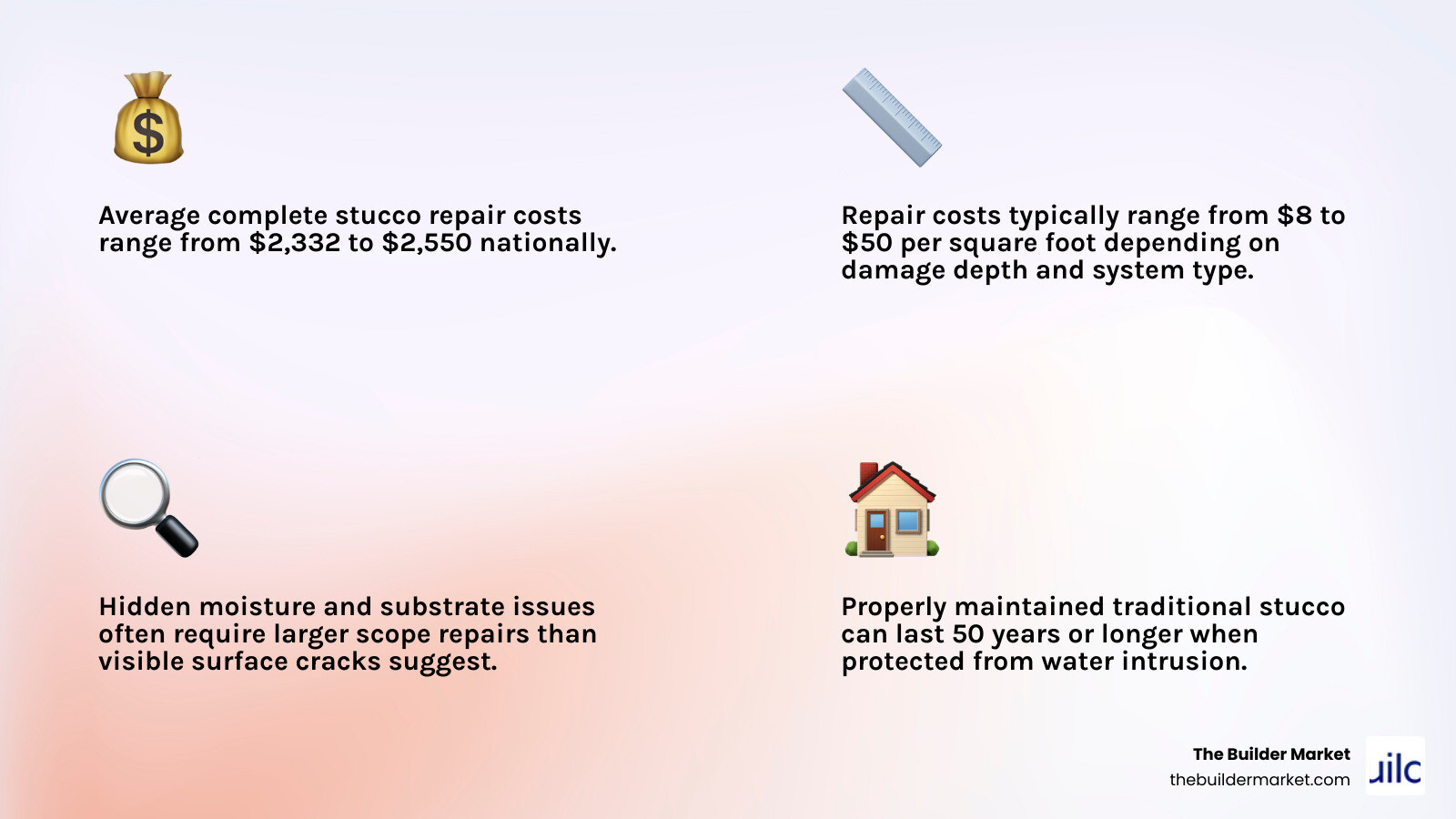
Stucco has been used as an exterior finish for centuries, and when properly maintained it can last 50 years or more. But visible cracks are often just the surface signal of a deeper issue — water intrusion, substrate rot, or failed flashing can all be hiding behind a wall that looks like it just needs a simple patch.
That's why getting an accurate, itemized assessment from a qualified local professional matters more than most homeowners realize. General online guides are useful starting points, but they can't account for your home's specific conditions — wall height, stucco system type, or the moisture lurking behind the finish coat.
This guide walks you through everything you need to know to understand, evaluate, and act on a stucco restoration plan with confidence.
Similar topics to stucco repair:
- foundation repair
- fence repair
- home improvement marketplace
What Factors Influence a Professional Stucco Repair Assessment?

When we receive a proposal for stucco restoration, the scope of work is carefully calculated. Professional contractors evaluate several distinct physical and aesthetic variables on-site to determine the complexity of the project. Understanding these variables can help us read between the lines of any proposal.
- Damage Depth: Surface-level hairline cracks require significantly less preparation and material than deep, structural cracks that penetrate the substrate. If the damage extends through the plaster layers to the wire mesh and framing, the restoration process becomes far more labor-intensive.
- Wall Height and Accessibility: Working on a single-story ranch home is straightforward. However, multi-story homes, narrow side yards, or walls obstructed by heavy landscaping require specialized scaffolding, safety harnesses, and extra setup time. This added complexity is always reflected in the overall project plan.
- Texture Matching: Stucco is not a one-size-fits-all material. From smooth Santa Barbara finishes to heavy lace, dash, or sand textures, matching the existing pattern requires a high level of artistry. If the patch does not match the surrounding wall, the repair will stand out like a sore thumb.
- Color Blending: Over time, sun exposure and weather fade exterior walls. Simply applying the original paint color to a patched area will result in an obvious, mismatched spot. Contractors must carefully blend the color or recommend painting the entire wall section to achieve a seamless finish.
To ensure these delicate aesthetic and structural factors are handled correctly, it is wise to partner with experienced professionals like Siding Stucco, who understand the nuances of texture matching and structural preparation.
Traditional vs. Synthetic Stucco Repair Variables
The type of stucco system installed on your home plays a massive role in how repairs are planned and executed. The two main systems are traditional three-coat cement plaster and synthetic stucco, often referred to as EIFS (Exterior Insulation and Finish System).
Traditional stucco is made from a time-tested mixture of Portland cement, lime, sand, and water. It is highly durable, breathable, and impact-resistant. However, because it is rigid, it is prone to minor hairline cracking as a house naturally settles.
Synthetic stucco (EIFS), on the other hand, utilizes acrylic resins and integrated foam insulation board. While EIFS offers excellent insulation value and flexibility—making it less susceptible to hairline cracks—it is entirely waterproof. This lack of breathability means that if water somehow gets behind the synthetic layers, it can become trapped. Without a proper drainage plane and vapor barrier, trapped moisture can rapidly rot the underlying wood framing. Because repairing EIFS requires specialized synthetic materials, base coats, and precision sealing, these repairs typically require more specialized labor and materials than traditional cement repairs. For homeowners navigating these material differences, consulting specialists like Siding Stucco can clarify which approach is best for your specific system.
Damage Severity and Hidden Moisture Issues
What looks like a simple cosmetic blemish can sometimes be the tip of a much larger iceberg. Stucco is designed to shed water, but when cracks develop, water intrusion can quietly compromise the structural integrity of your home.
When water gets past the stucco, it meets the vapor barrier or house wrap. If that barrier is torn, aged, or poorly installed, moisture reaches the wooden substrate. Over time, this leads to:
- Substrate Rot: The plywood or OSB sheathing softens and loses its structural strength.
- Mold Growth: Trapped moisture in warm wall cavities creates the perfect breeding ground for mold, requiring professional mold remediation.
- Weep Screed Failures: The weep screed at the base of your stucco wall is designed to allow moisture to escape. If it is blocked by soil, concrete, or debris, water wicks upward, causing severe wall-base deterioration.
If a contractor suspects hidden moisture issues, they may suggest performing a professional moisture test before finalizing your stucco repair plan. Addressing these underlying issues early prevents the newly patched stucco from failing again in a few short months. If you suspect moisture has already penetrated your walls, reaching out to experts like Siding Stucco is an excellent step toward diagnosing and halting the damage.
Key Components of a Stucco Restoration Project Scope
A comprehensive project scope should outline every phase of the restoration process. A professional repair is never as simple as slapping plaster over a crack; it requires systematic preparation and multi-layered execution.
| Traditional Stucco Repair Steps | Synthetic Stucco (EIFS) Repair Steps |
|---|---|
| 1. Chip away loose, damaged cement plaster | 1. Cut out damaged acrylic finish and foam insulation |
| 2. Inspect and repair underlying wire lath | 2. Inspect substrate and install new vapor barrier |
| 3. Apply a waterproof vapor barrier wrap | 3. Adhere new EPS foam insulation board |
| 4. Apply a scratch coat (base cement layer) | 4. Apply base coat with embedded fiberglass mesh |
| 5. Apply a brown coat (leveling cement layer) | 5. Apply primer to match absorption rates |
| 6. Apply texture-matched cement finish coat | 6. Apply acrylic finish coat with matching texture |
| 7. Cure for several days before painting | 7. Seal joints with high-grade elastomeric sealant |
Labor and Material Requirements
The physical materials used in stucco repair—such as Portland cement mix, wire lath, metal trim, and acrylic finish coats—represent only a small fraction of the project's overall requirements. The vast majority of a stucco repair project is dedicated to skilled plastering labor and the time required for proper execution.
Stucco application is a multi-step trade that cannot be rushed. Traditional cement plaster requires a specific curing time between coats. If a scratch coat or brown coat is painted or covered too quickly, the trapped moisture will eventually cause the finish coat to bubble and delaminate. This means technicians must often make multiple visits to your property over several days, which increases labor setup and travel requirements. Experienced contractors, such as Siding Stucco, factor these critical curing times into their project timelines to ensure a repair that lasts for decades.
Scaffolding, Disposal, and Surface Preparation
Before any new stucco can be applied, the work area must be thoroughly prepared and made safe. This involves several key operational steps:
- Multi-Story Access: If the damage is located on a second story, chimney, or gable, contractors must erect scaffolding or utilize pump jacks. This equipment ensures worker safety and provides a stable platform for applying plaster evenly.
- Surface Preparation: The existing wall must be clean to ensure a strong bond. Contractors typically perform pressure washing to remove dirt, mold, algae, and loose paint.
- Old Stucco Removal and Disposal: Chipping away old, failing stucco creates a significant amount of heavy, dusty debris. A complete project scope will include cleanup, hauling, and commercial debris disposal.
For complex setups requiring scaffolding, extensive preparation, and heavy cleanup, working with established professionals like Siding Stucco ensures that the job site remains clean, safe, and compliant with local regulations.
When to Repair vs. Fully Replace Your Home's Stucco Siding
One of the most difficult decisions we face as homeowners is determining whether to opt for localized patching or invest in a full remediation. While spot repairs are excellent for addressing isolated incidents—such as a lawnmower kickback or a minor settlement crack—they may not be the most practical solution if the entire system is failing.
Over time, structural movement, poor original installation, or natural aging can compromise the entire exterior envelope. If your stucco system has reached the end of its natural lifespan, continuously patching individual areas can become an ongoing game of whack-a-mole.
Signs Indicating Full Replacement is Needed:
- Widespread Cracking: Multiple deep, intersecting cracks across several walls rather than a single isolated area.
- Bulging or Soft Walls: Soft spots or visible bowing in the stucco, indicating that the underlying wood framing has rotted or the stucco has detached from the lath.
- Persistent Dampness or Water Stains: Large, dark water tracks that do not dry out days after it rains, signaling massive moisture retention behind the walls.
- Rust Stains: Orange or brown staining bleeding through the stucco, which indicates that the internal metal lath or fasteners have rusted away.
- Framing Rot or Musty Odors: A persistent damp, musty smell inside the home or visible rot along the lower rim joists and floor plates.
Signs of Widespread Structural Damage
Deep cracking and bulging walls are clear indicators of structural movement. When a home settles or experiences seismic shifts, rigid traditional stucco is forced to bend. Because cement cannot stretch, it cracks. If these cracks are deep and widespread, it usually means the stucco has completely separated from its wire mesh backing.
Once this separation occurs, the stucco is held up by little more than gravity. A heavy storm or high winds can cause entire sheets of plaster to peel away from the home. In these scenarios, localized patching is no longer a safe or viable option; full remediation is required to restore the home's structural integrity.
Evaluating a Local Stucco Repair Proposal for Long-Term Value
When you receive a professional proposal, it is important to look closely at the details. To ensure you are getting the best long-term value, evaluate the proposal against these professional standards:
- Contractor Licensing and Insurance: Ensure the contractor is fully licensed to operate in your state and carries comprehensive general liability and workers' compensation insurance.
- Itemized Proposals: A reputable contractor will break down the scope of work into clear line items, including preparation, material specifications, labor, scaffolding, and cleanup. Avoid vague, single-sentence proposals.
- Warranty Coverage: Ask about the warranty on both materials and labor. A confident professional should stand behind their repair work for at least one to five years.
- Project Timeline: The proposal should outline an estimated start date, curing intervals, and completion date, keeping in mind that weather conditions can affect plaster drying times.
- Local Building Codes: Ensure the proposed repair methods comply with local building codes, especially regarding proper weep screed clearance and vapor barrier installations.
Frequently Asked Questions About Stucco Restoration
Navigating a home exterior project can bring up many questions. Here are some of the most common inquiries we receive from homeowners planning a stucco restoration.
How do local climates in cities like Tacoma or Modesto affect stucco durability?
Local weather patterns play a massive role in how stucco ages and where damage is most likely to occur.
In wet, humid climates like Tacoma, WA, the primary threat is constant moisture exposure and high annual rainfall. If the stucco system lacks a proper drainage plane, moisture can quickly become trapped, leading to mold, framing rot, and system failure. In these regions, keeping gutters clean and ensuring the stucco is painted with a high-quality, breathable elastomeric paint is crucial.
In contrast, hot, dry climates like Modesto, CA, present different challenges. High summer temperatures cause building materials to expand, while cool nights cause them to contract. This constant thermal expansion and contraction puts immense stress on rigid cement stucco, often resulting in cosmetic hairline cracks. Fortunately, because humidity is low, these cracks are less likely to lead to immediate rot, but they should still be sealed to prevent water intrusion during winter rains.
What should be verified in a contractor's written proposal?
Before signing any contract, ensure the written proposal explicitly details:
- Permit Acquisition: Who is responsible for pulling necessary local building permits and scheduling inspections?
- Cleanup and Disposal Scope: Is the contractor responsible for hauling away all heavy cement debris and protecting your landscaping during the project?
- Material Specifications: What specific brands and types of stucco, vapor barriers, and sealants will be used?
- Change Order Policies: How will unexpected discoveries—such as hidden rot or structural damage found after chipping away old stucco—be documented and addressed?
- Project Schedule: A fair schedule should be tied to project milestones (e.g., initial phase, completion of base coats, and final sign-off). Never pay the full amount upfront.
Does homeowners insurance cover stucco restoration work?
Generally, standard homeowners insurance policies only cover stucco repairs if the damage was caused by a sudden, accidental, and covered peril, such as a severe storm, hail, lightning strike, or falling tree limb.
Insurance typically does not cover repairs resulting from gradual wear and tear, water damage caused by long-term maintenance neglect, poor original installation, or rising ground moisture. If you notice cracking or staining, it is best to address it immediately rather than waiting for the damage to spread, as insurance companies expect homeowners to perform basic preventive maintenance to protect the property.
Conclusion
A successful exterior project begins with a clear, realistic understanding of your home's unique needs. By learning the key factors that influence a professional stucco repair assessment—from material differences to climate-specific wear—you can approach your restoration project with complete confidence.
At The Builder Market, we make it simple to bridge the gap between planning and execution. Our AI-powered platform connects you directly with vetted, highly qualified local contractors who understand your regional building codes and climate challenges. Whether you need a simple cosmetic touch-up or a comprehensive wall remediation, we are here to help you protect and beautify your home.
Find vetted local contractors for your home exterior project today and take the first step toward a beautiful, weather-tight home.
Need Help?
Contact us today to discuss your needs. Our team is ready to help.
About the Author
The Builder Market
More Articles
View All PostsRelated Articles
Ready to grow with The Builder Market?
Explore listings, AI growth, sites, and lead options—or talk to our team about what fits your business.

