How to Fix Dishwasher Not Draining
Fix dishwasher not draining issues with expert local help—troubleshoot clogs, standing water, and drainage problems fast.
How to Fix Dishwasher Not Draining
What to Do When Your Dishwasher Is Not Draining
A dishwasher not draining is one of the most common appliance problems homeowners face — and one of the most frustrating. You run a full cycle, open the door expecting clean dishes, and instead find a pool of murky water sitting at the bottom of the tub.
The good news? Most drainage problems can be fixed without calling a professional. Here is a quick overview of the most common causes and fixes:
| Cause | Quick Fix |
|---|---|
| Clogged filter | Remove, rinse, and scrub the filter under warm water |
| Kinked drain hose | Straighten the hose and ensure a high loop under the counter |
| Blocked garbage disposal | Run the disposal, or check for a knockout plug in new installs |
| Blocked air gap | Remove the cap and clear debris with a bottle brush |
| Interrupted wash cycle | Reset the dishwasher and run a fresh drain cycle |
| Drain pump failure | Listen for humming with no water movement — may need a pro |
In most cases, the culprit is a clogged filter, a blocked drain hose, or an issue with the connected garbage disposal. These are all things you can check yourself in under 30 minutes with basic tools.
This guide walks you through every step — from manually removing standing water to inspecting each part of your dishwasher's drain system — so you can get back to clean dishes as quickly as possible.
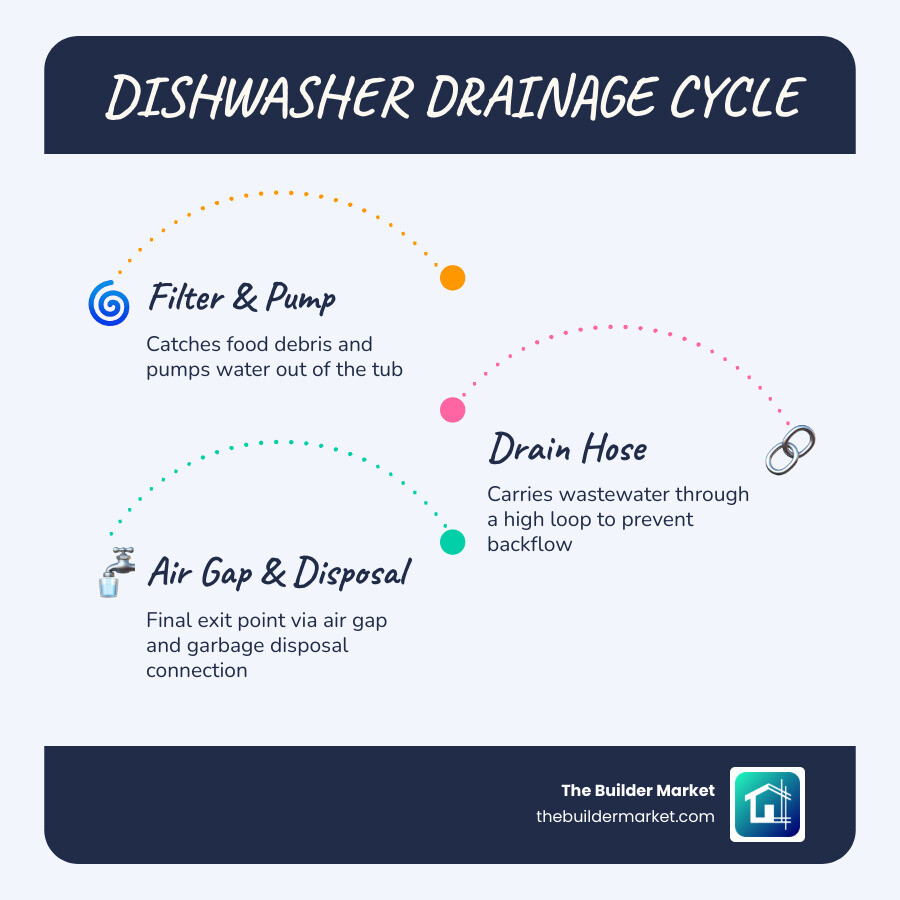
I'm noticing my dishwasher not draining in [City]. What are the common signs?
When you’re in the middle of a busy week in May 2026, the last thing you need is a kitchen disaster. Identifying the early warning signs of a dishwasher not draining can save you from a major flood or a costly floor repair. While a pool of water at the bottom is the most obvious symptom, there are several other red flags that indicate your appliance is struggling to expel waste.
Common signs include:
- Standing Water: Finding more than a cup of water in the basin after the cycle finishes.
- Foul Odors: A stagnant, "sewer-like" smell caused by trapped food particles rotting in un-drained water.
- Gurgling Sounds: Strange noises coming from the secondary drain or the sink while the dishwasher is running.
- Dirty Dishes: If the water doesn't drain, the dishwasher essentially recirculates dirty, greasy water over your plates.
- Cycle Interruptions: Modern units may detect a drainage fault and stop mid-cycle to prevent an overflow.
If you notice these issues, it is time to investigate. For residents in Kentucky, local experts like Precision Appliance Repair can provide professional insight if the DIY route feels overwhelming.
Identifying drainage obstructions
Obstructions often start small. You might notice murky water that looks "thick" or grey, which usually indicates that grease and fine food particles are beginning to solidify in the sump. Over time, this creates a residue buildup that narrows the passage for water. If your dishwasher seems to take longer than usual to finish a cycle, it may be struggling to push water through a partially blocked filter or hose. Professionals like Peterson Appliance Service often find that these slow-building clogs are the primary cause of eventual pump failure.
Sensory indicators of a clog
Your nose is often the first tool in your troubleshooting kit. Because the dishwasher is connected to your home's drainage system, a clog can lead to the backup of sewer gases. If you smell something akin to sulfur or rotting eggs when you open the door, it’s a sign that the "P-trap" or the air gap is not functioning correctly. Additionally, listen to the motor. A healthy dishwasher has a rhythmic "whoosh" during the drain phase. If you hear a low humming with no sound of moving water, the pump might be jammed by a foreign object like a cherry pit or a shard of glass. For those in the Dallas area, Sparks Plumbing LLC can help diagnose whether the issue is in the appliance or the home's plumbing.

Why is there standing water at the bottom of my dishwasher after a cycle?
It’s important to distinguish between a mechanical failure and a simple operational hiccup. Sometimes, a dishwasher not draining is simply the result of an interrupted cycle. If someone opened the door mid-wash or if there was a brief power surge, the unit may have skipped the final drain phase.
Other mechanical culprits include:
- The Float Switch: This is the plastic "saucer" at the bottom of the tub. If it gets stuck in the "up" position by a stray utensil, the dishwasher thinks it’s already full and won't trigger the drain pump.
- The Drain Pump: This motor is responsible for forcing water out. If it burns out or becomes mechanically jammed, the water stays put.
- The Check Valve: This one-way valve prevents dirty water from flowing back into the dishwasher. If it's stuck closed, nothing goes out; if it's stuck open, the water drains but then rushes back in.
If you suspect a plumbing-related backup, companies like Roto-Rooter Plumbing & Water Cleanup specialize in clearing the larger lines that your dishwasher relies on.
How to Manually Drain a Dishwasher Not Draining Safely
Before you can fix the problem, you need to get the water out. Working with electricity and water is dangerous, so always disconnect the power at the breaker or unplug the unit first.
To drain the unit:
- The Scoop Method: Use a small cup or ladle to scoop the water into a bucket.
- The Sponge/Towel Method: For the last inch of water, use large sponges or old towels to soak up the remaining liquid.
- The Wet/Dry Vac: This is the fastest method. Use a shop vac to suck the water directly out of the sump.
Getting the water out allows you to see the filter and the pump intake clearly. If you’re in Rhode Island and need a hand with the heavy lifting, All City Appliance Repair can assist with safe water removal and diagnostics.
Tools and supplies for troubleshooting
You don't need a professional van to fix a dishwasher not draining. Most homeowners already have the necessary supplies in their junk drawer or pantry:
- Screwdrivers (Phillips and Torx): To remove the kickplate or filter covers.
- Needle-nose Pliers: To pull out glass shards or bones from the pump.
- Bottle Brush: Perfect for cleaning the air gap and drain hose.
- Vinegar and Baking Soda: For breaking down grease and mineral deposits.
- Bucket and Rags: To manage the inevitable spills.
Having these ready will make the process much smoother. If you find you're missing a specialized tool or the job looks too complex, Action Appliance Repair is a great resource for Cleveland residents.
How can I troubleshoot and fix a dishwasher clog myself?
The most common reason for a dishwasher not draining is a dirty filter. Most modern dishwashers have a manual-clean filter system rather than the loud, self-cleaning grinders found in older models.
Step 1: Clean the Filter Remove the bottom rack. You will see a cylindrical filter in the floor of the dishwasher. Twist it counter-clockwise to unlock it. Pull it out and rinse it under hot, soapy water. Use a soft brush (an old toothbrush works wonders) to gently scrub the mesh. Check the "sump" area where the filter sits for any large chunks of food or foreign objects.
If you are in Texas and the filter is clean but the water still won't move, Mr. Rooter Plumbing of Frisco can help investigate deeper plumbing issues.
Why is my dishwasher not draining after installing a new disposal?
This is a classic "aha!" moment for many DIYers. If you recently installed a new garbage disposal and now your dishwasher won't drain, the knockout plug is almost certainly the cause. Garbage disposals come with a solid plastic plug in the nipple where the dishwasher hose connects. If you don't knock this plug out with a screwdriver and hammer before connecting the hose, the water has nowhere to go.
Also, check your air gap—the small chrome cylinder on your sink. If this is clogged with lint or food, it will prevent the vacuum needed for drainage. Residents in Idaho can reach out to The Appliance Service Company LLC to ensure their new installations are code-compliant and functional.
Inspecting the drain hose for kinks or blockages
The drain hose is the long, flexible tube that runs from your dishwasher to the sink drain. If this hose is pinched or kinked—which often happens when the dishwasher is pushed back into its cabinet—the pump won't be able to move water.
Ensure your hose has a "high loop." This means the hose should be secured to the very top of the cabinet under your sink (at least 20 inches high) before it connects to the drain. This prevents sink water from siphoning back into the dishwasher. If the hose itself is clogged with grease, you may need to disconnect it and flush it with a garden hose or replace it entirely. For those in Wisconsin, Akrit Sales & Service Inc provides expert help with hose routing and replacement.
Who in [City] specializes in professional dishwasher repair services?
While we love a good DIY victory, some problems require a licensed technician. If you have cleaned the filter, checked the disposal, and straightened the hose, but your dishwasher not draining persists, you likely have a mechanical or electrical failure.
Professional technicians can handle:
- Drain Pump Replacement: If the motor has burnt out.
- Solenoid Issues: If the electrical component that opens the drain valve has failed.
- Control Board Faults: If the "brain" of the dishwasher isn't sending the signal to drain.
- Check Valve Malfunctions: Replacing the rubber flap that prevents backflow.
In the Fort Worth area, A-Best Appliance Repair Service is highly recommended for these more technical repairs.
When to stop DIY troubleshooting
It’s important to know when to put down the wrench. Continuing to run a dishwasher that won't drain can burn out the motor or cause an electrical short.
| Symptom | Action |
|---|---|
| Grinding or shrieking noises | Stop. This indicates a mechanical obstruction in the pump impeller. |
| Multiple slow drains in the house | Call a plumber. This is a main line clog, not an appliance issue. |
| Electrical error codes (e.g., E24, F5) | Consult the manual. These often require specific sensor replacements. |
| Water leaking onto the floor | Shut off water and power. You likely have a cracked hose or pump seal. |
Preventive maintenance to stop future clogs
The best way to fix a dishwasher not draining is to prevent the clog from ever forming. Follow these simple rules to keep your appliance running smoothly through May 2026 and beyond:
- Scrape, Don't Rinse: Modern detergents actually need a little bit of food protein to work effectively, but large chunks (and especially stickers from produce) will clog your filter.
- Run the Disposal First: Always run your garbage disposal for 30 seconds before starting the dishwasher to ensure the path is clear.
- Hot Water Start: Run the kitchen faucet until the water is hot before you press "Start" on the dishwasher. This helps dissolve grease immediately.
- Monthly Cleaning: Once a month, place a bowl of white vinegar on the top rack and run a hot cycle. This dissolves mineral scale and grease buildup.
- Clean the Filter: Set a recurring reminder to rinse your dishwasher filter every 2 to 4 weeks.
Frequently Asked Questions about Dishwasher Maintenance
Can natural solutions like baking soda and vinegar help unclog a dishwasher drain?
Yes! For minor grease clogs, you can pour a mix of one cup of baking soda and one cup of vinegar into the standing water at the bottom of the unit. Let it fizz for 20 minutes, then flush with a gallon of very hot (not boiling) water. This is a great first step before taking things apart.
Is it normal for a dishwasher to have some water at the bottom?
A small amount of water—usually about a half-inch or less—at the very bottom of the filter housing is normal. This water keeps the seals from drying out and cracking. However, if water is covering the floor of the tub or visible above the filter screen, you have a drainage issue.
How often should I clean the dishwasher filter to prevent clogs?
If you only run your dishwasher once or twice a week and scrape your plates well, once every few months is fine. However, for a busy family running daily cycles, we recommend cleaning the filter at least once a month to prevent odors and drainage problems.
Conclusion
Dealing with a dishwasher not draining doesn't have to ruin your week. By following the steps in this guide—checking your filter, inspecting your disposal, and ensuring your drain hose is clear—you can solve the vast majority of drainage issues yourself.
At The Builder Market, we believe in empowering homeowners with the right information and the right connections. Our AI-powered platform is designed to connect you with vetted, local professionals who can handle everything from a simple pump replacement to a full kitchen remodel. Whether you are looking for a plumber in Dallas or an appliance expert in Cleveland, we make the process fast, transparent, and reliable.
Don't let a clogged drain slow you down. If your DIY efforts haven't solved the problem, Schedule professional service with a local expert today and get your kitchen back in working order.
Need Help?
Contact us today to discuss your needs. Our team is ready to help.
About the Author
The Builder Market
More Articles
View All PostsRelated Articles
Ready to grow with The Builder Market?
Explore listings, AI growth, sites, and lead options—or talk to our team about what fits your business.

