In Depth Guide to Construction Loan for Fixer Upper
Discover how a construction loan for fixer upper properties can finance your renovation from purchase through completion with expert guidance.
In Depth Guide to Construction Loan for Fixer Upper
Why a Construction Loan for a Fixer Upper Might Be Your Smartest Move in 2026
A construction loan for a fixer upper gives homebuyers a way to finance both the purchase of a distressed property and the cost of renovating it — all in a single loan. Instead of juggling a traditional mortgage plus separate financing for repairs, this approach rolls everything together, using the home's projected value after renovations (called the after-repair value, or ARV) to determine how much you can borrow.
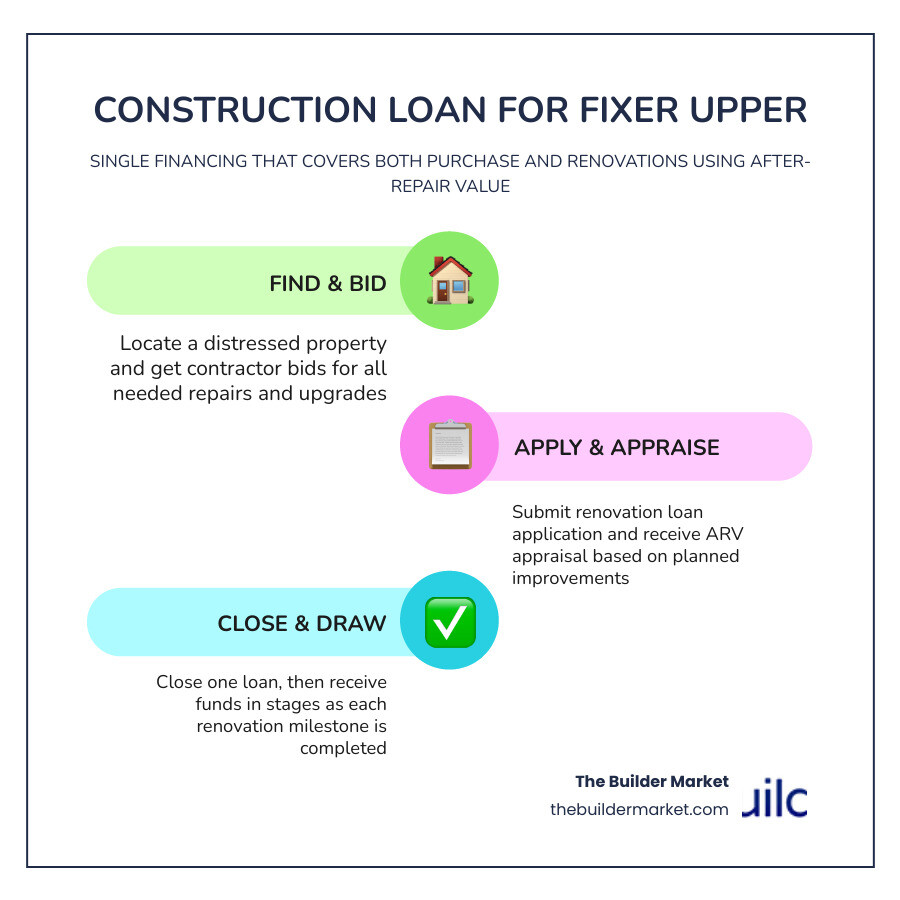
Here's a quick look at how it works:
- Find a fixer-upper priced below market due to its condition
- Get contractor bids for the renovations needed
- Apply for a renovation loan (such as FHA 203(k), Fannie Mae HomeStyle, or a construction-to-permanent loan)
- Lender orders an ARV appraisal based on the planned improvements
- Close on one loan covering both purchase and renovation costs
- Renovation funds are released in stages (called draws) as work is completed
- Final inspection confirms work is done before you move in
This approach opens doors that a standard mortgage simply can't. Conventional mortgages require a home to meet minimum habitability standards on day one — meaning a property with a failing roof, outdated electrical, or structural issues will often be rejected outright. Renovation loans are designed specifically to bridge that gap.
Fixer-upper homes are typically priced well below comparable move-in-ready properties, and strategic renovations can build equity faster than buying a turnkey home. But navigating the loan programs, requirements, and contractor timelines is a real challenge for most homeowners.
This guide walks you through everything — from loan types and eligibility to the step-by-step process and common pitfalls to avoid.
Construction loan for fixer upper vocab explained:
- adding home improvement loan to mortgage
- best way to finance a home remodel
- home renovation financing
What is a Construction Loan for Fixer Upper Properties?
When we talk about a construction loan for a fixer upper (often referred to interchangeably as a renovation mortgage or rehab loan), we are looking at a specialized financial product designed to solve a classic real estate catch-22.
Usually, if you want to buy a house that needs major work, traditional lenders will turn you down. Standard mortgages require properties to meet strict habitability standards before closing. If a home has active plumbing leaks, a compromised foundation, or a non-functioning heating system, standard underwriters deem the property un-insurable and reject the mortgage application.
A renovation construction loan bypasses these rules by letting you borrow money based on the property’s future potential rather than its current, damaged state. Instead of evaluating the home's value as it sits on day one, the lender evaluates what the home will be worth once your contractors complete their work.

How Lenders Determine After-Repair Value (ARV)
The magic behind any construction loan for a fixer upper lies in the After-Repair Value (ARV). This is the estimated market value of the property once all proposed renovations, structural updates, and cosmetic improvements are fully completed.
To determine this value, lenders do not just send an appraiser to look at the current structure. Instead, they require you to submit a detailed package containing your contractor’s official plans, architectural drawings, material specifications, and itemized cost estimates.
The appraiser then performs a "subject-to" appraisal. They look at the home in its current state, review your renovation plans, and search for comparable sales (comps) in the surrounding neighborhood that already feature those upgraded amenities. For example, if you are adding an extra bathroom and a modern kitchen, the appraiser looks at recent sales of homes in the area with those exact specifications.
Before you even reach the appraisal stage, it is crucial to understand the property's baseline condition. Getting a thorough home inspection from local experts like Peace of Mind Home Inspections, Harmony Home Inspections LLC, or Obsidian Inspections LLC ensures you do not miss hidden structural flaws that could skew your renovation plans and ARV calculations.
Qualifying for a Construction Loan for Fixer Upper Projects
Because these loans carry more moving parts than standard home purchases, underwriting guidelines are naturally more rigorous. Lenders are taking a risk on a property that is currently unfinished or uninhabitable, meaning your financial profile and project plans must be rock-solid.
To qualify, you must meet several key criteria:
- Credit Score Minimums: These vary by program. Government-backed options like the FHA 203(k) are more forgiving, often accepting credit scores starting in the high 500s. Conventional renovation programs, such as Fannie Mae HomeStyle, typically require a credit score of at least 620 to 680 depending on the lender and down payment size.
- Down Payment Requirements: Your down payment is not calculated solely from the purchase price of the home. Instead, it is based on the total acquisition cost (purchase price plus total renovation costs). Down payment requirements can range from 3% to 5% for conventional loans, 3.5% for FHA, and down to 0% for qualified military veterans or rural buyers.
- Debt-to-Income (DTI) Ratio: Lenders generally prefer a DTI ratio below 43% to 45%, ensuring you have plenty of room in your monthly budget to handle the mortgage payments once construction is complete.
- Contractor Approval: Lenders will not let just anyone do the work. You must hire licensed, insured, and vetted general contractors who can provide formal references, proof of licensing, and detailed line-item budgets.
- Property Boundaries and Feasibility: For larger structural remodels or additions, you may also need specialized zoning verification or land surveys to ensure your plans comply with local setbacks. Working with professionals like Ford Land Surveying Inc helps guarantee your blueprints are legally sound before submitting them to your lender.
Key Renovation Loan Programs for Distressed Properties
There is no single "one-size-fits-all" construction loan for a fixer upper. Depending on your financial background, your credit profile, and whether you plan to live in the home or use it as an investment, several prominent programs exist to help you bring your vision to life.
FHA 203(k) Rehabilitation Mortgages
Backed by the Federal Housing Administration, the FHA 203(k) loan is one of the most popular options for owner-occupants, particularly first-time homebuyers. It allows you to buy a primary residence and fund its repairs with a down payment as low as 3.5% and a more flexible credit score threshold.
The FHA 203(k) program is split into two distinct paths:
- Limited 203(k): Designed for simpler, non-structural cosmetic updates (such as remodeling a kitchen, replacing flooring, painting, or upgrading appliances). There is a capped limit on the total renovation budget, and you do not need to hire an official HUD consultant to oversee the project.
- Standard 203(k): Required for major structural repairs, additions, foundation work, or projects that exceed the Limited budget threshold. This program requires you to work with an approved HUD consultant who acts as an independent inspector, reviewing contractor bids, scheduling progress inspections, and managing the fund disbursements.
Fannie Mae HomeStyle and Freddie Mac CHOICERenovation
If you have stronger credit and want more flexibility in your design choices, conventional renovation loans are an excellent path. Fannie Mae’s HomeStyle and Freddie Mac’s CHOICERenovation loans follow standard conventional guidelines but allow you to bundle purchase and rehab costs.
Unlike FHA loans, which restrict "luxury" additions, conventional programs let you finance virtually any permanent upgrade—including building a new detached garage, installing a swimming pool, or constructing an Accessory Dwelling Unit (ADU).
Furthermore, conventional programs are not strictly limited to primary residences. You can use a HomeStyle loan to renovate a second home, a vacation cabin, or even certain single-unit investment properties. Freddie Mac also offers the CHOICEReno eXPress program, which streamlines approval and documentation for smaller, fast-tracked cosmetic updates that must be completed within 180 days of closing.
VA and USDA Renovation Options
For eligible military members, veterans, and rural homebuyers, specialized government-backed programs offer incredible terms:
- VA Renovation Loan: Allows qualified veterans and active-duty service members to purchase and renovate a home with up to 100% financing (zero down payment). The renovations must focus primarily on making the home safe, sanitary, and structurally sound.
- USDA Renovation Loan: Designed for low-to-moderate-income buyers purchasing properties in designated rural areas. Like the VA loan, it offers a zero down payment option, though the renovation budget is typically capped at a lower maximum limit and must focus on essential safety and habitability upgrades.
How the Renovation Financing Process Works in Practice
Managing a construction loan for a fixer upper is vastly different from a standard home purchase. Instead of receiving a lump sum at closing and managing the project on your own time, the funds are held in a secure escrow account and distributed systematically.
Step-by-Step Timeline from Application to Move-In
To keep your project on track, you should expect to navigate a structured timeline:
- Get Preapproved: Before you go house hunting, work with a specialized renovation lender to determine your maximum qualification limit based on your income, credit, and estimated down payment capability.
- Find the Property: Work with a real estate agent who understands fixer-uppers. You will need to put the home under contract, ideally securing a longer closing window (usually 45 to 60 days) to allow time for contractor bids and specialized appraisals.
- Get Contractor Bids: Bring in licensed general contractors to walk the property, diagnose needed repairs, and draft a comprehensive, line-item scope of work.
- Order the ARV Appraisal: Your lender will submit your contractor's bid package to an appraiser, who will calculate the home's projected future value.
- Underwriting and Closing: Once the underwriter approves your financial profile, the contractor's credentials, and the ARV appraisal, you will close on the loan. The purchase price is paid to the seller, and the renovation funds are locked into an escrow account.
- Begin Construction: Your contractor pulls permits and begins work. The lender releases payments in stages as milestones are achieved.
- Final Inspection and Move-In: Once all work passes municipal codes and a final lender inspection, the remaining escrow funds are released, and you can officially move into your newly remodeled home.
Managing Contractor Draws and Inspections
Lenders do not write a blank check to your contractor at closing. Instead, they use a structured "draw schedule."
As your contractor completes specific milestones—such as finishing the rough-in plumbing, completing the roof replacement, or hanging drywall—they submit a draw request to the lender. Before releasing those funds, the lender sends an inspector to the property to verify that the work has been completed to professional standards.
To keep communication clear and projects organized, many homeowners and builders utilize platforms like Restotracker to track progress milestones. When it comes time for draw inspections, working with independent, certified experts like Protec Real Estate Inspection Services or AM Best Inspection Service ensures that every phase of construction is thoroughly documented and approved before payments are released.
Why You Need a Construction Loan for Fixer Upper Renovations
Attempting to buy a distressed home with cash and then slowly renovating it out of pocket can quickly drain your liquid reserves. A structured renovation mortgage offers a safer, more sustainable alternative.
By rolling your purchase and construction costs into a single mortgage, you benefit from:
- One Set of Closing Costs: You avoid paying fees on multiple loans or refinancing later.
- Lower Interest Rates: Renovation mortgages generally offer much lower interest rates than personal loans, credit cards, or hard money investor loans.
- Immediate Equity Growth: Because you are buying a home below market value and upgrading it strategically, you often walk into "instant equity" once the project wraps up.
Before finalizing your purchase, it is highly recommended to get a comprehensive baseline evaluation of the home's systems. A detailed inspection by Pro Inspection Property Solutions can help you identify hidden problems early, allowing you to include them directly in your initial contractor bid and loan budget.
Renovation Loans vs. Alternative Financing Options
If you already own a home or have significant cash reserves, a construction loan for a fixer upper might not be your only path. Depending on your financial strategy, you might consider alternative options like Home Equity Lines of Credit (HELOCs), cash-out refinances, or personal loans.
Here is a side-by-side comparison to help you choose the right strategy:
| Financing Option | Best Suited For | Key Advantages | Major Drawbacks |
|---|---|---|---|
| Renovation Loan (e.g., FHA 203k, HomeStyle) | Homebuyers purchasing a distressed property with minimal cash reserves. | Single closing; underwritten based on future value (ARV); low interest rates. | Strict lender oversight; contractor vetting required; longer closing timelines. |
| HELOC (Home Equity Line of Credit) | Existing homeowners with significant equity looking to remodel their current property. | Flexible, revolving credit line; pay interest only on what you use; lower upfront fees. | Variable interest rates; requires existing equity; puts your current home at risk. |
| Personal Loan | Minor, fast cosmetic upgrades under a lower budget threshold. | Quick approval; no collateral required; no strict contractor restrictions. | Higher interest rates; shorter repayment terms; smaller borrowing limits. |
| Cash-Out Refinance | Homeowners with substantial equity who want a predictable, fixed-rate monthly payment. | Fixed interest rates; predictable payments; can secure large sums of cash. | Resets your entire primary mortgage rate; high closing costs; requires existing equity. |
Frequently Asked Questions About Renovation Financing
Can I complete the renovation work myself as a DIY project?
Generally, no. Most renovation loan programs require you to hire licensed, insured, and independent professional contractors to perform the work. This rule protects both you and the lender, ensuring that all structural, electrical, and plumbing elements meet local building codes and industry safety standards.
While some conventional programs allow highly qualified borrowers to perform minor "sweat equity" tasks, the guidelines are incredibly strict. You must typically prove you are a licensed professional in that specific trade, and the lender must approve your DIY plans before closing. For the vast majority of projects, hiring vetted pros is the safest and most reliable route.
What happens if the renovation project exceeds the budget?
To protect against unexpected surprises—such as finding mold behind old drywall or discovering outdated knob-and-tube wiring—lenders require you to build a "contingency buffer" directly into your loan.
Typically, lenders mandate a contingency reserve of 10% to 20% of your total renovation budget. If your contractor uncovers an unforeseen issue during demolition, they can submit a change order to the lender to draw from this contingency fund. If you complete the entire renovation without touching these reserve funds, the remaining balance is usually applied directly to your principal loan balance, lowering your overall debt.
How long do I have to complete the renovations?
Renovation loans are designed to be temporary construction phases, meaning lenders enforce strict completion timelines. Depending on the program you choose, you are typically required to complete all work within 6 to 12 months of closing.
For example, Freddie Mac’s CHOICERenovation program allows up to 450 days for complex structural overhauls, while the streamlined CHOICEReno eXPress requires completion within 180 days. If your project faces legitimate delays (such as supply chain issues or extreme weather), you can work with your lender to submit formal extension requests, though these must be well-documented and approved in writing.
Conclusion
Taking on a fixer-upper is an incredibly rewarding journey, allowing you to build substantial equity and customize a house into your absolute dream home. While navigating a construction loan for a fixer upper requires careful planning, strict contractor vetting, and meticulous budgeting, partnering with the right financial programs and local experts makes all the difference.
We are here to simplify that journey. As an AI-powered marketplace, we connect homeowners with highly qualified, vetted home improvement professionals across the country to ensure your project is completed on time, on budget, and to the highest standards.
Ready to take the first step toward transforming your fixer-upper? Find vetted addition and remodeling professionals near you and get started on your remodeling project today!
Need Help?
Contact us today to discuss your needs. Our team is ready to help.
About the Author
The Builder Market
More Articles
View All PostsRelated Articles
Ready to grow with The Builder Market?
Explore listings, AI growth, sites, and lead options—or talk to our team about what fits your business.

