The Ultimate Guide to Driveway Paving Contractors
Find the right driveway paving contractor for your project with expert installation, material options, and maintenance tips.
The Ultimate Guide to Driveway Paving Contractors
What a Driveway Paving Contractor Does — and How to Find the Right One
Hiring a driveway paving contractor is one of the most impactful decisions you can make for your home's curb appeal, functionality, and long-term value. Whether your existing driveway is cracking, crumbling, or simply overdue for an upgrade, knowing what to look for in a contractor — and what questions to ask — can save you time, money, and serious headaches.
Here's a quick overview of what a professional driveway paving contractor typically offers:
- Full installation — new driveway construction from site prep to finished surface
- Replacement — removal of old pavement and complete reinstallation
- Resurfacing and overlays — adding a new layer over an existing base
- Repair services — crack filling, pothole patching, and drainage correction
- Sealcoating — protective coating to extend driveway lifespan
- Material options — asphalt, concrete, brick pavers, natural stone, and gravel
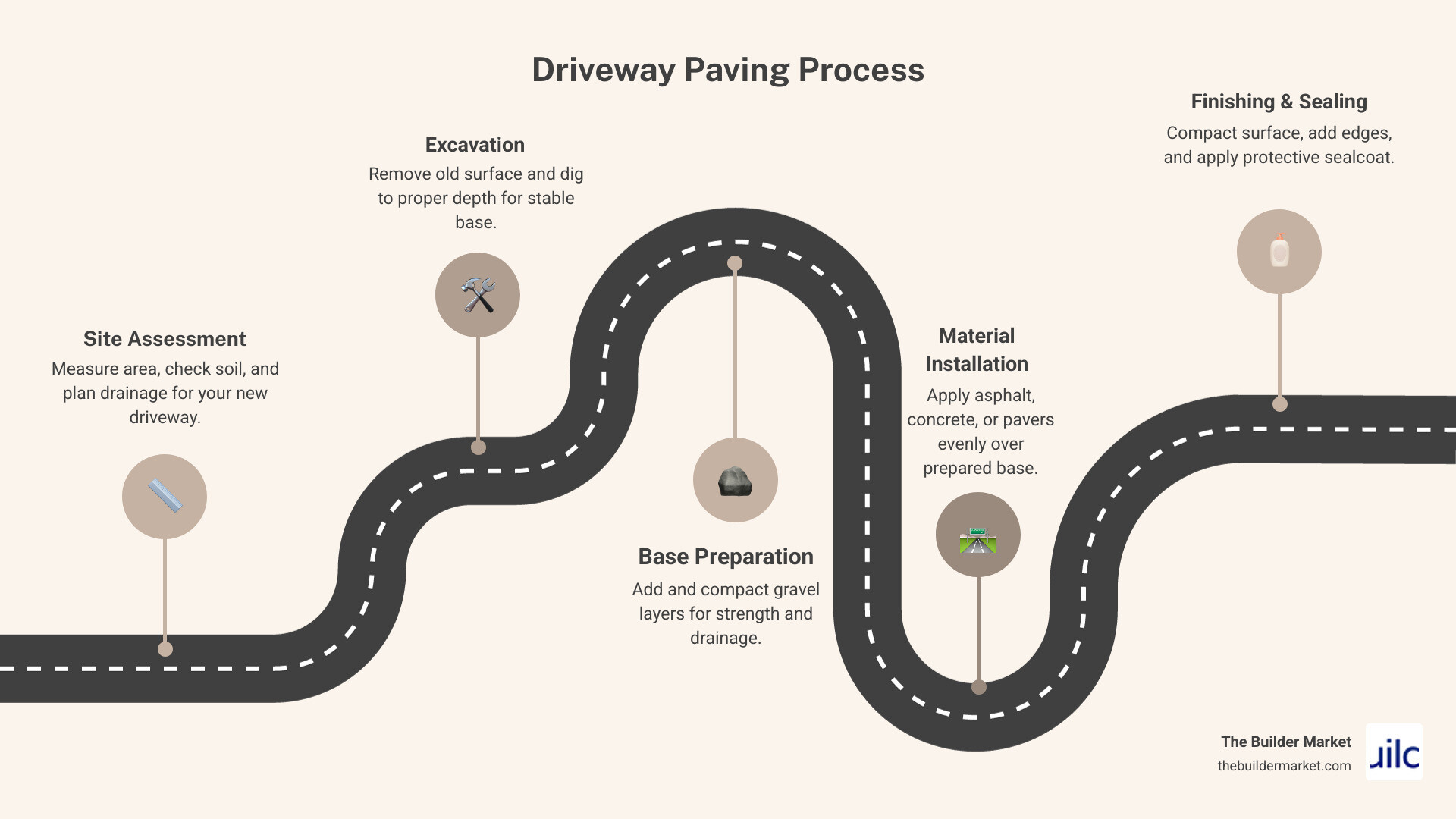
A quality contractor handles every phase: excavation, grading, base compaction, material installation, and finishing. They are licensed, insured, and bonded, and they back their work with a written warranty.
This guide walks you through everything you need to know — from comparing paving materials and understanding site prep requirements, to spotting red flags in quotes and verifying contractor credentials — so you can hire with confidence.
Driveway paving contractor terminology:
- Electrical repair contractor
- Green building contractor
- Home addition contractor
Services Offered by a Professional Driveway Paving Contractor

When we think of a driveway paving contractor, we often picture heavy machinery laying down a steaming, fresh layer of asphalt. However, full-service paving is an intricate engineering process that requires expertise in excavation, land grading, and drainage solutions before any top material is ever applied.
A professional contractor begins by assessing the layout of your land. Proper water runoff is the single most important factor in the lifespan of any paved surface. Without expert grading, water will pool on the surface, seep into the base layers, and quickly destroy your investment. Professional contractors utilize advanced laser-guided equipment to ensure your driveway slopes away from your home's foundation and any adjacent structures.
Residential Driveway Paving Contractor Services
For residential properties, a professional contractor manages everything from simple aesthetic upgrades to complex structural overhauls. Standard residential services include complete driveway replacement, driveway expansion (such as adding a parking pad or widening a turnaround), and the construction of private roadways and walkways.
If you are looking to replace a cracked and unlevel entrance, a seasoned professional will ensure the old materials are excavated responsibly and recycled. They can also design matching pathways that tie your home's exterior features together. For high-quality residential services, you can connect with local experts in your area, such as those specializing in Paving.
Commercial Paving and Parking Pad Solutions
Commercial properties demand a different level of durability and scale. Professional contractors provide parking lot construction, heavy-duty asphalt overlays, and custom vehicular parking pads designed to withstand heavy truck traffic.
The primary difference between residential and commercial projects lies in the thickness of the materials used. While most residential parking pads and driveways use 80 mm vehicular pavers or a standard layer of asphalt, commercial environments typically require 100 mm pavers or thicker, reinforced concrete and asphalt layers to support delivery trucks, municipal vehicles, and constant daily traffic. If you are a business owner seeking commercial-grade pavement, reaching out to specialized commercial services like Paving ensures your surface is engineered to handle industrial loads.
Comparing Driveway Materials: Asphalt, Concrete, and Pavers
Selecting the right material for your driveway is a balance of aesthetics, climate durability, maintenance, and long-term lifespan. Below is a comparison of the three most common materials:
| Feature | Asphalt | Concrete | Interlocking Pavers |
|---|---|---|---|
| Durability | Highly flexible; resists cracking in cold climates | Extremely rigid; handles heavy weight without rutting | Superior strength; individual units shift without cracking |
| Lifespan | 15 to 30 years | 30 to 40+ years | 50+ years |
| Aesthetic Options | Classic dark, uniform look; can be colored/stamped | Smooth light gray; stamped, stained, or exposed aggregate | Endless colors, shapes, and custom patterns |
| Maintenance | Requires sealcoating every 2–5 years | Low maintenance; occasional sealing and joint cleaning | Low maintenance; easy to replace individual damaged units |
Asphalt and Blacktop Installation
Asphalt (often referred to colloquially as blacktop) is one of the most popular choices for American driveways. Hot mix asphalt is poured at high temperatures and compacted quickly to form a smooth, flexible surface. For a standard residential driveway, a professional contractor will typically lay down 2 to 3 inches of compacted asphalt over a robust 6 to 8-inch deep granular base.
Because asphalt is flexible, it performs exceptionally well in regions that experience severe seasonal temperature swings. However, it does require a curing period. While you can often walk on it shortly after compaction, blacktop typically takes several days to fully harden, and vehicles should be kept off the surface for at least 24 to 48 hours to prevent tire marks and ruts. For reliable asphalt installations, you can work with experienced contractors like Paving or Paving.
Concrete and Masonry Options
Concrete and masonry driveways offer incredible longevity and structural strength. A standard residential concrete driveway is poured between 4 and 6 inches deep. Professional concrete contractors pay close attention to concrete strength, utilizing mixes rated between 2,500 and 3,000 psi for standard use, or up to 4,000 psi for heavy-duty driveways that support larger vehicles.
To prevent cracking under tension, a high-quality installation includes reinforcement installation (such as steel rebar or welded wire mesh) suspended within the concrete pour. Additionally, control joints must be cut at precise intervals to guide natural settling cracks. If concrete feels too plain, homeowners often turn to masonry options like brick pavers or natural stone to create stunning, custom-designed driveways. For concrete and stone masonry projects, you can partner with skilled professionals such as Paving, Paving, or Paving.
Key Factors in Project Scope and Site Preparation
A beautiful driveway is only as good as the foundation beneath it. Before any surface material is poured or placed, your driveway paving contractor must execute meticulous site preparation. This process begins with determining the project specifications, calculating the exact material volume required, and evaluating the unique site conditions of your property.
Subgrade Compaction and Drainage Requirements
The secret to a driveway that lasts for decades lies in the subgrade compaction. If the soil beneath your driveway is loose or unstable, the weight of vehicles will quickly cause the surface to sag, crack, and fail. A durable driveway or parking pad requires:
- Granular base depth — 8 to 12 inches of compacted aggregate base, laid and compacted in 2 to 3-inch lifts.
- Slope requirements — A minimum of 1% to 2% slope (fall) away from your home and other structures to ensure water drains naturally.
- Edge restraints — Solid restraints (such as concrete curb borders or heavy-duty poly edging) to prevent pavers or materials from migrating outward over time.
- French drains — In areas with poor natural drainage, installing a French drain (perforated pipe bedded in washed stone and wrapped in non-woven geotextile) keeps water from undermining the driveway base.
For expert site prep and drainage management, you can trust experienced regional paving teams like Paving and Paving.
How Climate and Soil Impact Your Driveway Paving Contractor Choice
Your local geography heavily dictates the best paving materials and installation methods for your property. In northern states, freeze-thaw cycles present a major challenge. When water seeps into the soil or pavement cracks and freezes, it expands, causing the ground to heave upward. When it thaws, the ground settles, leaving empty voids that crack the surface. In these climates, flexible materials like asphalt or individual interlocking pavers are highly recommended because they can shift slightly without breaking.
Soil composition is equally important. Clay soils hold onto water and expand significantly when wet, requiring a deeper gravel base to distribute weight and allow water to drain away. Conversely, sandy soils drain well but may require extra compaction and stabilizers to keep the driveway foundation from shifting. A knowledgeable local contractor will always tailor their installation technique to match your area's soil conditions and regional weather patterns while strictly adhering to local building codes.
Frequently Asked Questions About Driveway Paving
Navigating a major home improvement project can feel overwhelming. Here are some of the most common questions homeowners ask when planning a new driveway.
How long does a typical driveway installation take?
The timeline for a driveway project varies depending on the material chosen and the complexity of the site prep:
- Demolition and excavation — Typically takes 1 to 2 days to remove the old driveway and grade the soil.
- Base preparation — Installing and compacting the gravel base takes about 1 day.
- Pouring/Paving — Laying asphalt or pouring concrete usually takes 1 day. For a team of six, a standard residential driveway expansion can often be paved in under 6 hours.
- Curing and access restrictions — For asphalt, keep vehicles off the surface for 24 to 48 hours. For concrete, wait at least 7 days before parking vehicles on the new slab. Interlocking pavers can be driven on almost immediately after the joint sand is swept and compacted.
What maintenance is required to ensure driveway longevity?
To protect your investment, regular maintenance is essential:
- Asphalt — Apply a high-quality sealcoat 1 to 2 years after installation, and then every 3 to 5 years thereafter. Sealcoating fills hairline cracks and protects the asphalt from UV rays and oil spills.
- Concrete — Apply a penetrating concrete sealer every 3 to 5 years to protect against water absorption and salt damage.
- All Materials — Keep the surface clean and repair cracks immediately. Water entering a crack will quickly erode the base below. For deep-cleaning services that prep your driveway for maintenance, professional pressure cleaning from Paving is an excellent step.
How can I verify a contractor's credentials and avoid red flags?
Protect yourself from poor craftsmanship and paving scams by performing thorough due diligence:
- Verify licensing, insurance, and bonding — Always ask for the contractor's license number and verify it with your state's licensing board. Ensure they carry both general liability insurance and workers' compensation, and ask for proof of bonding.
- Demand a written contract — Never accept a verbal agreement. A professional proposal should include detailed written specifications: material types, exact thickness of both the base and surface layers, drainage plans, project timeline, and warranty details.
- Watch out for red flags — Be highly suspicious of "doorstep solicitors" claiming they have leftover asphalt from a nearby job and can offer a steep discount. Reliable contractors plan their material volumes precisely. Other red flags include demanding a large cash deposit upfront, refusing to provide a written contract, or pushing you to make a decision immediately.
Conclusion
A driveway is far more than just a place to park your car — it is a major structural element of your home's exterior. By choosing the right materials, ensuring proper base preparation, and hiring a reputable professional, you can guarantee a beautiful, long-lasting surface that enhances your home's curb appeal for decades.
When you are ready to find a trusted driveway paving contractor in your local area, we can help. The Builder Market is an AI-powered online marketplace designed to connect homeowners with verified, high-quality professionals across the country. Our platform makes it simple to communicate directly with contractors, manage your project, and explore convenient financing options.
Ready to get started on your next home improvement project? Connect with top-rated Paving professionals today and bring your vision to life!
Need Help?
Contact us today to discuss your needs. Our team is ready to help.
About the Author
The Builder Market
More Articles
View All PostsRelated Articles
Ready to grow with The Builder Market?
Explore listings, AI growth, sites, and lead options—or talk to our team about what fits your business.

