Ultimate Checklist for Contractor Management Software
Streamline contractor management software for 2026 projects with automated compliance, tax reporting, and real-time visibility.
Ultimate Checklist for Contractor Management Software
Why Contractor Management Software Is the Missing Piece in Your Project Toolkit
Choosing the right contractor management software can mean the difference between a smooth project and a costly, compliance-heavy mess. If you're comparing options, here's a quick breakdown of what to look for:
Top features to compare when evaluating contractor management software:
- Onboarding automation - Does it handle document collection, license verification, and contractor profiles automatically?
- Compliance tracking - Can it monitor certifications, insurance, and safety requirements with automated alerts?
- Payment and invoicing - Does it support automated invoicing, multiple payment methods, and tax filing (including 1099-NEC)?
- Reporting and analytics - Does it provide real-time visibility into contractor spend, performance, and risk?
- Integrations - Does it connect with your existing accounting, HR, or CRM tools via open API?
- Mobile access - Can contractors and managers use it in the field?
- Scalability - Does it support a growing or distributed workforce, including international contractors?
Managing independent contractors is harder than most businesses expect. A striking statistic from a recent industry study found that while 74% of professionals believe effective contractor management is critical to business success, only 30% feel genuinely prepared to do it well. That gap is enormous — and it's exactly where contractor management software steps in.
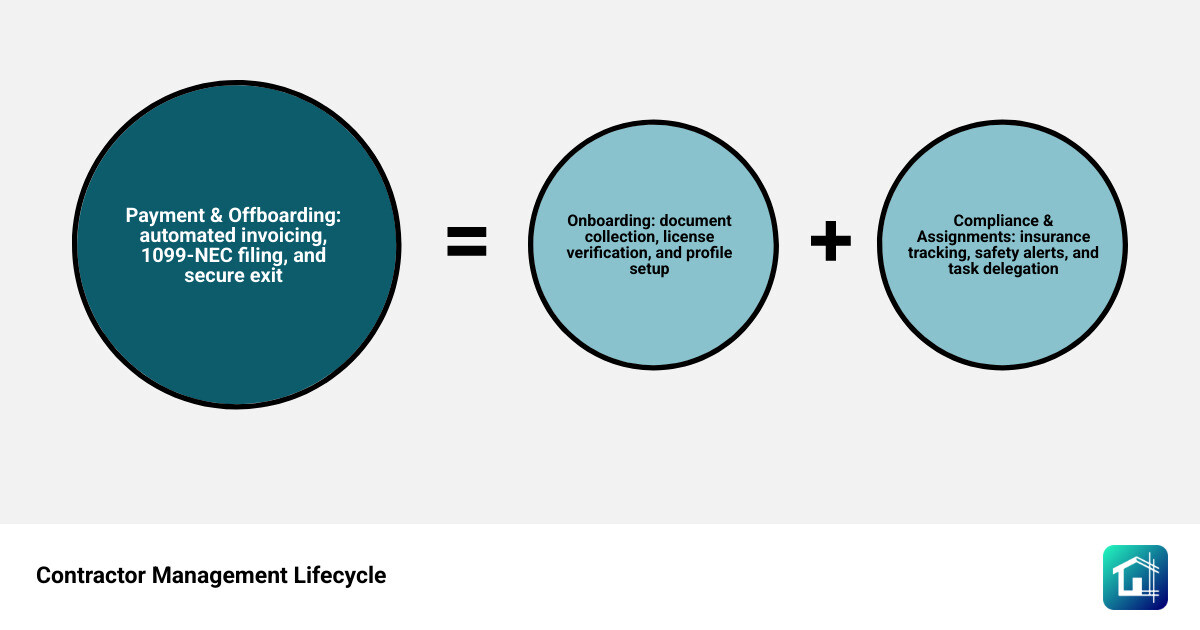
Unlike general project management tools, contractor management platforms are built specifically around the worker lifecycle. They handle the full journey: sourcing and onboarding, compliance verification, assignment tracking, payment, and offboarding. For businesses juggling 1099 workers alongside full-time employees, that distinction matters a great deal. Contractors operate under different legal and tax rules, and managing them with the wrong tools creates real risk.
This guide compares the leading options available in 2026 so you can find the right fit for your team.
Understanding the Role of Contractor Management Software in 2026
As we navigate the construction and home improvement landscape in 2026, the way we work has shifted. We no longer rely solely on a fixed, in-house crew. Instead, we utilize a dynamic network of independent professionals to bring specialized skills to every project. This shift makes contractor management software an essential part of our digital office.
An independent contractor is a type of contingent worker hired to complete a specific scope of work. Legally, they are often classified as 1099 workers, which means their wages are subject to self-employment tax. Unlike employees, we don't tell them exactly how to do their jobs, but we are very focused on the outcomes. Managing this relationship requires a delicate balance of oversight and independence.
For professionals like those at Kopman Construction, staying on top of these classifications is vital for avoiding legal headaches and ensuring every project meets our high standards.

The importance of contractor management software for modern projects
Why is there such a gap between knowing contractor management is important (74% of us agree!) and actually being ready for it (only 30% are)? It usually comes down to the sheer volume of paperwork. Between tracking insurance certificates, verifying licenses, and managing various payment schedules, things can get messy fast.
The right software creates an auditable paper trail. If a regulatory body ever asks for proof of a contractor's safety training from three years ago, we don't want to be digging through a dusty filing cabinet. We want it available in two clicks. This level of organization is what separates the pros from the amateurs in today's market.
Differentiating from general project management tools
It is a common mistake to think that a standard project management tool can handle everything. While those tools are great for scheduling tasks and tracking milestones, they often lack the specialized "people" features we need for contractors.
General tools might tell you that a wall needs to be framed by Tuesday. However, contractor management software tells you that the person framing that wall has an expired worker's comp policy and hasn't signed the latest safety waiver. It focuses on the worker lifecycle and compliance, which is a different beast entirely. Expert teams like Shull Construction understand that specialized tools are necessary to manage the complexities of modern construction.
Essential Features for Managing Independent Professionals
When we look for the best contractor management software in 2026, we aren't just looking for a digital Rolodex. We need a powerhouse that automates the "boring stuff" so we can focus on the craftsmanship.
Streamlining communication with contractor management software
Communication is the glue that holds a project together. Good software provides real-time visibility into who is on-site and what they are doing. One of the most impressive statistics we’ve seen is a 91% reduction in the time it takes to dispatch a worker when using a dedicated management system. That is hours of saved time every single week.
Centralizing this data means that if a homeowner asks for an update, we have the answer immediately. Companies like Cross and Company and Coastal Cottages of South Carolina thrive because they keep their lines of communication open and organized.
Automated compliance and safety tracking
In our industry, safety isn't just a suggestion; it’s a requirement. We need to track Certificates of Insurance (COI) and verify that every professional on our site meets OSHA 1926 standards.
Modern software now even includes predictive safety modeling. By analyzing millions of data points and leading indicators, these systems can rank contractors as standard, elevated, or high-risk. This allows us to proactively address potential issues before they become accidents. It’s about being smart and staying safe.
Why Your Business Needs contractor management software
If you are still using spreadsheets to track your 1099 workers, we have some news for you: there is a better way. The transition from manual tracking to automated software isn't just about convenience; it’s about the bottom line.
| Feature | Manual Tracking | Automated Software |
|---|---|---|
| Onboarding | Days of back-and-forth emails | Minutes via digital portals |
| Compliance | Hard to track; easy to miss | Automated alerts for expirations |
| Invoicing | Prone to errors and delays | Automated and tied to milestones |
| Visibility | Scattered in files and heads | Centralized real-time dashboard |
| Risk | High (missing insurance/licenses) | Low (automated guardrails) |
Using these tools can lead to a 25% reduction in contingent labor spend within the first few months. By streamlining how we hire and pay, we eliminate waste and ensure we are getting exactly what we pay for. This efficiency is a hallmark of businesses like Blazy Construction Inc Alaska Office.
Enhancing financial transparency and spend control
We all want to know where our money is going. With contractor management software, we get full job costing and real-time visibility into our numbers. On average, companies using high-end spend management tools see an 8% savings on their total contractor spend.
Automated invoicing ensures that we only pay when work is verified and complete. This level of financial control is exactly what established firms like Schuchart Corp use to maintain their reputation for reliability and fiscal responsibility.
Supporting global and distributed workforces
In 2026, your best specialist might not live in the same state—or even the same country. Managing international contractors brings a whole new set of challenges, from currency exchange to global tax compliance.
The best software handles these complexities for us. It can verify international tax IDs and ensure we are filing 1099-NEC forms correctly with the IRS. It provides a secure, auditable trail for every dollar that crosses a border, keeping us compliant and our contractors happy.
Maximizing Efficiency Through System Integrations
The true power of contractor management software is unlocked when it talks to your other tools. We don't want to enter the same data into three different programs.
Connecting field operations with back-office systems
We need a seamless flow of information from the job site to the accounting office. When a contractor clocks in on their mobile device, that data should automatically sync with our payroll system and update our job costing reports.
Whether it's syncing with QuickBooks for the books or a CRM for client updates, these integrations save us from the "data entry blues." This connectivity is vital for busy operations like Arnold Venti Builders Inc and A L Construction Services Inc, ensuring nothing falls through the cracks.
Leveraging AI for project visualization and planning
One of the most exciting developments in 2026 is the integration of AI into our management tools. We can now use AI to read architectural plans, extract dimensions, and seed our estimates automatically.
AI-powered visualization tools also allow us to show homeowners what their project will look like before we even swing a hammer. From virtual staging to concept visualizations, these tools help us win more bids and ensure our clients are thrilled with the vision. It's about combining high-tech tools with high-quality craftsmanship.
Frequently Asked Questions about Contractor Management
What is the difference between an independent contractor and an employee?
This is a big one. The main difference is the level of control. Employees (W2) are generally told when, where, and how to work. Independent contractors (1099) have more freedom in how they complete the work but are held strictly to the deliverables and outcomes agreed upon in their contract. Contractors also don't receive employee benefits and are responsible for their own self-employment taxes.
How does software help with tax compliance?
The software acts as a digital watchdog. It can automatically verify Tax IDs, collect W-9 forms during onboarding, and generate 1099-NEC forms at the end of the year. Most importantly, it keeps a detailed record of every payment and contract, providing an auditable trail that makes tax season much less stressful.
Can these systems be used on mobile devices?
Absolutely. In 2026, if a software isn't mobile-friendly, it's not useful for construction. Contractors can use their phones to upload photos of their progress, sign digital documents, and update their status in real-time. This keeps everyone on the same page, whether they are in the office or on a ladder.
Conclusion
Finding the right contractor management software is about more than just staying organized; it’s about building a foundation for growth and safety. By automating the complex lifecycle of independent professionals—from that first onboarding document to the final tax filing—we protect our businesses and our clients.
At The Builder Market, we believe in the power of technology to make home improvement better for everyone. We are an AI-powered online marketplace that connects homeowners with vetted professionals across the United States. Whether you are looking for a specialist in New York or a general contractor in Seattle, our platform offers the tools you need to manage your project with confidence.
Ready to find the perfect pro for your next project? Find vetted professionals in Litchfield Park and across the country today. Let's build something great together.
Need Help?
Contact us today to discuss your needs. Our team is ready to help.
About the Author
The Builder Market
More Articles
View All PostsRelated Articles
Ready to grow with The Builder Market?
Explore listings, AI growth, sites, and lead options—or talk to our team about what fits your business.

